You can trust VideoGamer. Our team of gaming experts spend hours testing and reviewing the latest games, to ensure you're reading the most comprehensive guide possible. Rest assured, all imagery and advice is unique and original. Check out how we test and review games here
On January 21, Ubisoft announced a full company restructure, taking the company’s over 40 development studios and placing them within five creative houses. Ubisoft has a hard climb to make shareholders happy after shares plummeted following the announcement, and with the sweeping cuts across the board, it’s going to be a rough time for the French video game giant, which may well get rougher.
The restructure is part of Ubisoft’s attempt to recapture the heights of its success and to “reclaim its creative leadership, regain agility, drive a sharp rebound” amid other business buzzwords to get investors back on board. This includes moving Ubisoft’s “largest and established franchises”, such as Assassin’s Creed and Far Cry, under the combined banner of Vantage Studios, in which Chinese technology conglomerate Tencent holds a 25% stake.
A complete company overhaul

Before the official restructuring announcement, Ubisoft shuttered the recently unionised Ubisoft Halifax, which focused on mobile games like Assassin’s Creed Rebellion. As part of the announcement, however, those in power have decided that Ubisoft Stockholm, which collaborated on Avatar Frontiers of Pandora, also needs to go.
Alongside these closures, it has also cancelled six games that did not meet “the new enhanced quality” that was expected. This has included the Prince of Persia The Sands of Time remake, as well as other unannounced titles and new IPs.
Several games have also had their releases delayed, pushing one title, heavily rumored to be an Assassin’s Creed Black Flag remake, to the next financial year.
The impact of these restructures has also landed Ubisoft in some potential legal trouble. Marc-Alexis Côté, former head of the Assassin’s Creed franchise, had his position removed due to the franchise’s move over to the Tencent-backed Vantage Studios.
Côté asserts that he was pushed into a “disguised dismissal” and is asking Ubisoft for $1.3 million (£0.97 million) in damages. However, compared to the amount of money that Ubisoft is looking to save, this is just a drop in the ocean of the cost of restructuring.
The quest for less money
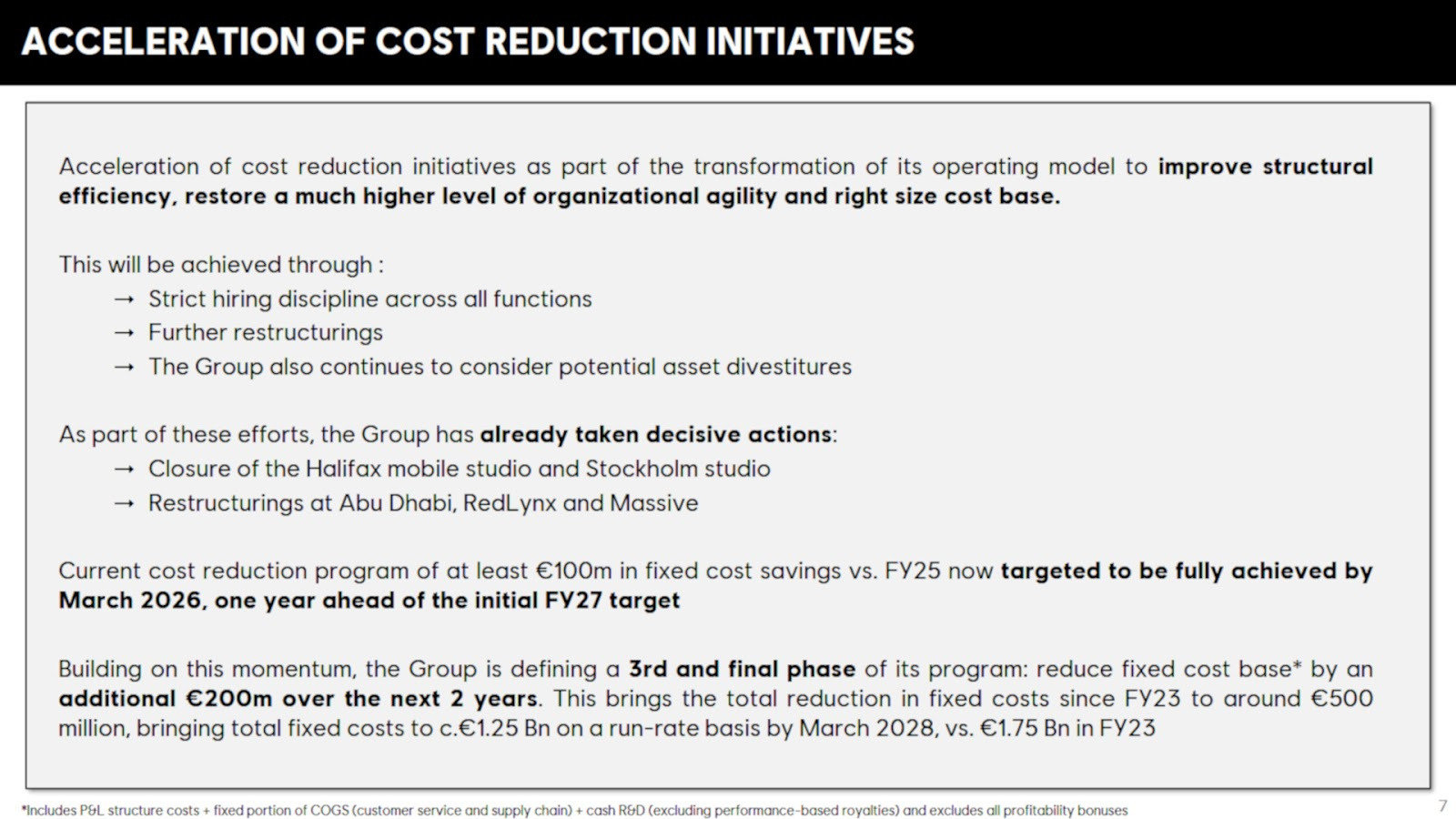
The reshaped structure of Ubisoft is very much a ‘spend money to make money’ situation. Ubisoft aimed to make a fixed cost savings of €100 million ($120 million) compared to the previous financial year, where it operated with a loss of €159 million ($190.8 million).
The rumored Assassin’s Creed Black Flag game could come as early as April if it’s been pushed into FY27, but the point is that any profit it would make won’t be affected by the expected losses from all these cost-reduction efforts.
We’re not out of the woods yet, however, as after announcing the success of the cost-reduction program, Ubisoft has clarified that it’s now entering the next phase. Ubisoft has succeeded in reducing costs by €100 million, so what’s another €200 million?
Reports suggest that this cost-reduction program has been running since 2023, and at the end of it, it will reduce their fixed running costs from €1.75 billion ($2.1 billion) to €1.25 billion ($1.5 billion). For the uninitiated, fixed costs are only one part of the cost, the ones that never move, no matter how good your sales are.
More studios are going to close, and people are going to lose their jobs.
Plugging up a sinking ship
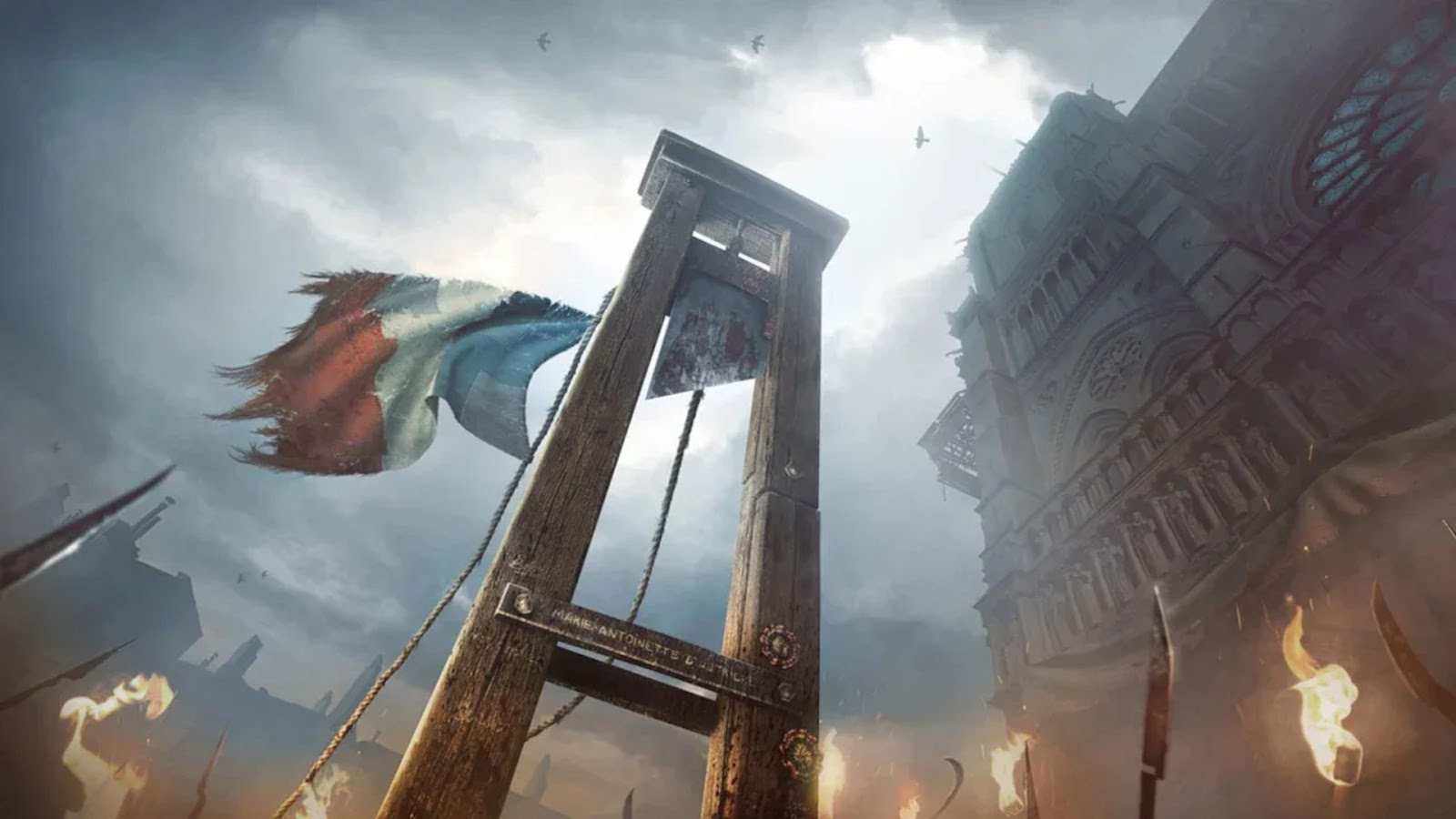
We’re already seeing the impact of the next phase of Ubisoft’s cost-reduction program, as Ubisoft intends to cut around 200 jobs from its HQ in Paris. At the moment, it isn’t an out-and-out firing, with an Ubisoft spokesperson calling it a “collective, voluntary mutual termination”.
Fortunately, France boasts relatively powerful unions and broad workers’ rights, so Ubisoft has to do this by the book. To reduce the workforce in such a way, they have to go through a Rupture Conventionnelle Collective (RCC), which effectively means that it requires negotiations and collective agreements with Trade Unions. If no one wants to go, then they don’t have to.
Unfortunately for Ubisoft, it looks like it might not be getting far with this particular process. One of the unions representing Ubisoft’s workers, Solidaires Informatique, has already made calls to strike regarding the company’s cost-cutting plan and the end of remote working.
Now, after these proposed direct job cuts, it looks like a strike is fully materialising, with all the French unions representing Ubisoft allegedly agreeing to a strike from February 10 to 12, around the same time that the financial report for Ubisoft’s Q3 is set to be released.
All this means that Ubisoft is under heavy scrutiny and heavier pressure.
Unhappy investors
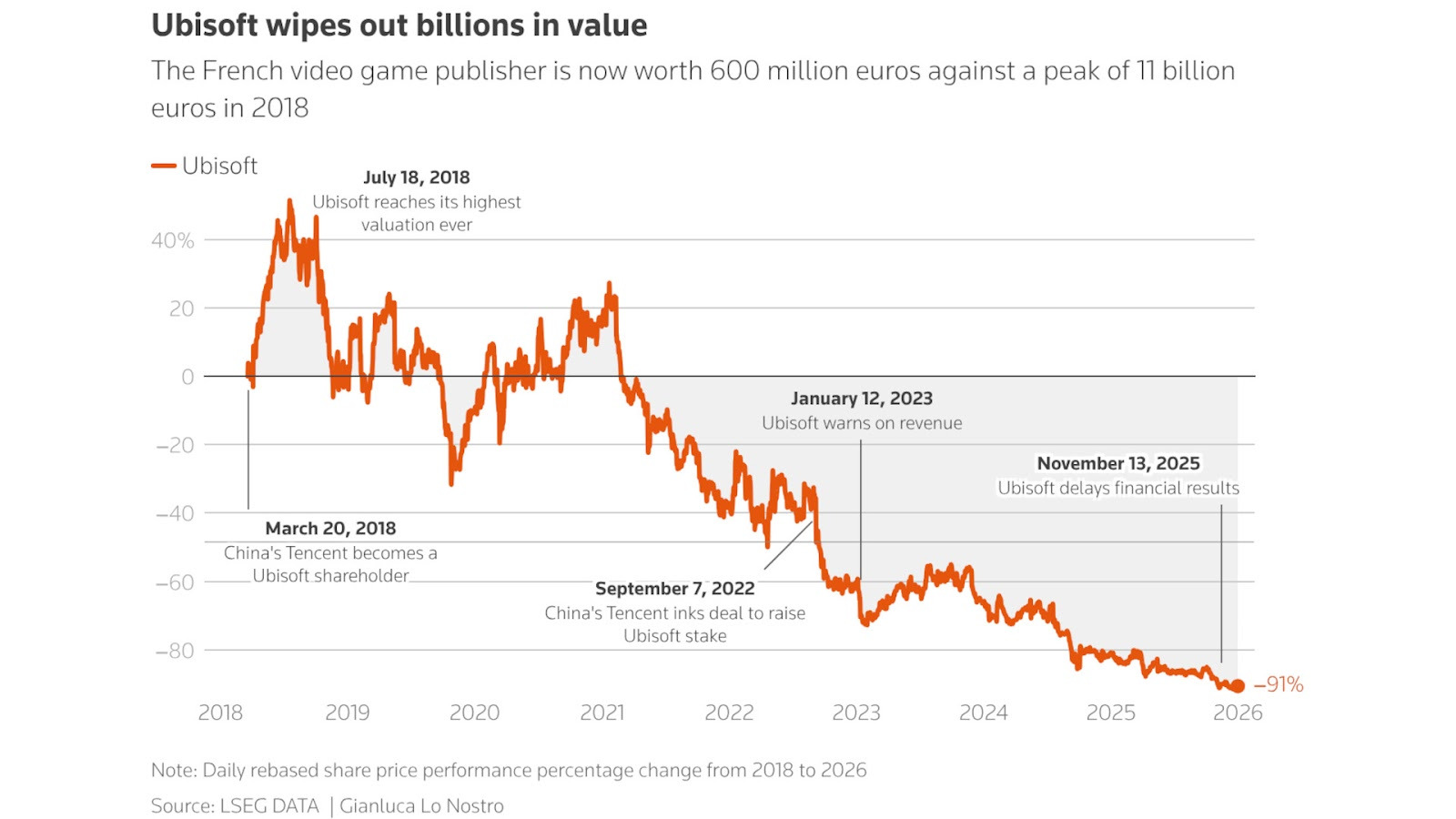
Ubisoft has already mentioned that its sales for Q3, representing October to December 2025, will amount to €330m ($396m).
The effect of these layoffs, delays, and cancellations isn’t making Ubisoft’s financial year look particularly rosy. Ubisoft is expecting a loss of around €1 billion ($1.2 billion) by the end of March this year.
This massive loss is driven heavily by closures and cancellations, as costs associated with these projects would normally be spread out across multiple years, using an accounting process called depreciation. However, cancellations mean that the costs now come all at once, landing on Ubisoft’s balance sheet for around €650 million ($780 million).
It’s no wonder that shares are dropping and investors are unhappy. If Ubisoft isn’t making any profit this year, shareholders won’t be seeing any dividends. It feels like the kind of move Ubisoft had to make to survive, and maybe even make some better games.
Until then, any Ubisoft news we see is likely going to be rough, and we’ll need to keep an eye out for which studio is next on the chopping block.
FAQs
Ubisoft is a publicly traded company, and thus ownership is split between its various shareholders. The biggest shareholders are the Guillemot family, with 14% of the shares, while the second largest is Tencent, with just under 10% of the shares. The Guillemot family founded Ubisoft, and Yves Guillemot is still the company’s CEO.
Ubisoft is currently being sued by Marc-Alexis Côté, who alleges he was pushed out of the company by the recent restructuring. Plaintiffs are also suing Ubisoft for allegedly sharing personal information with Meta.
Ubisoft is certainly in a difficult position, considering its low market value due to share price drops, the impact of studio closures, and increasing friction with its workers’ unions. However, it is putting all its financial pressure into the current financial year, and could still rebound.
Ubisoft’s games have received criticism for their formulaic, repetitive open-world design that didn’t seem to change much, no matter the franchise. With this new company restructure, it’s entirely possible this could change.
About the Author