You can trust VideoGamer. Our team of gaming experts spend hours testing and reviewing the latest games, to ensure you're reading the most comprehensive guide possible. Rest assured, all imagery and advice is unique and original. Check out how we test and review games here
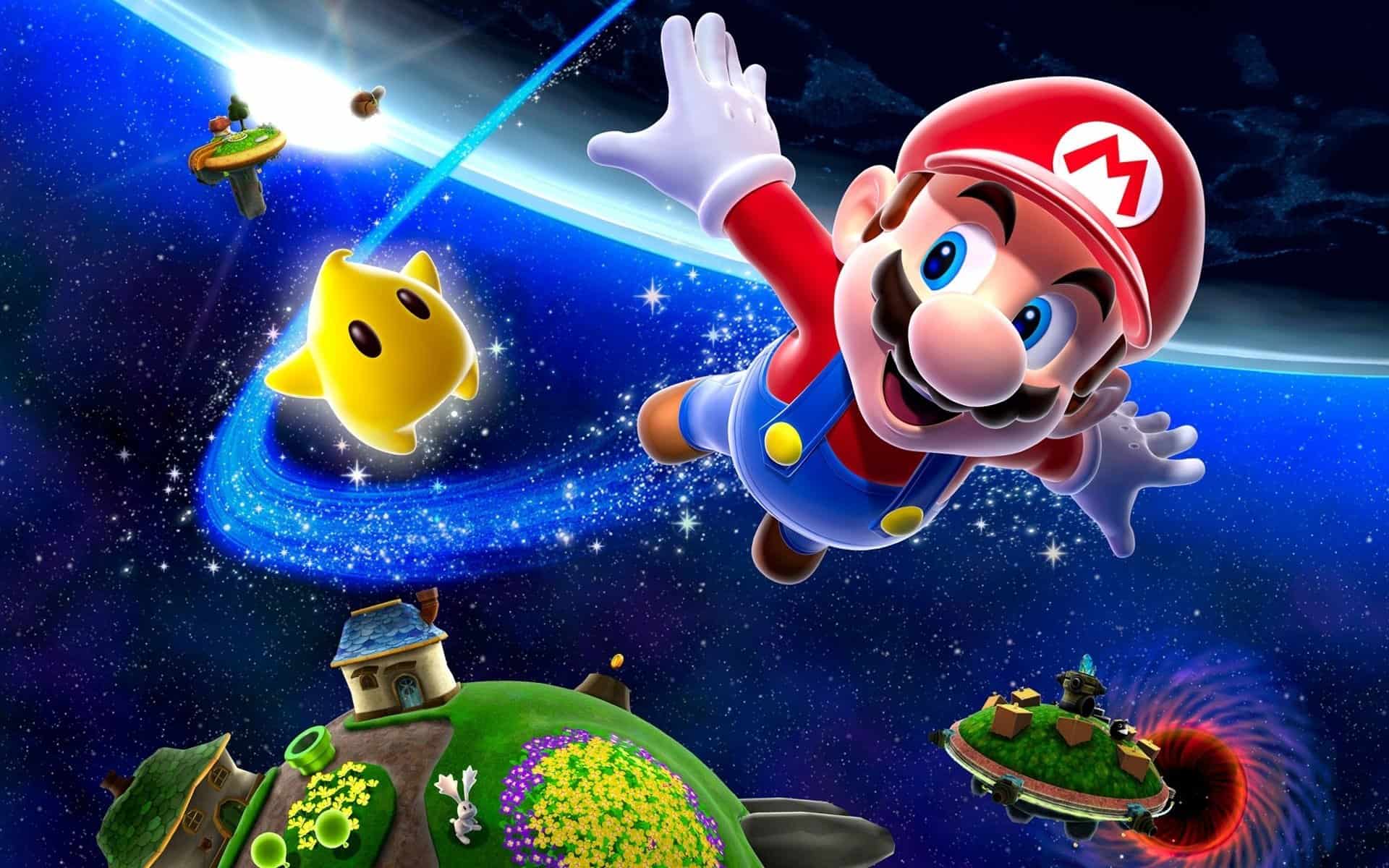
On Wednesday, Nintendo revealed Super Mario Galaxy to the public for the first time in the form of a short playable demo, showcasing one of Wii’s flagship titles. While hundreds of E3 attendees lined up around the Wii booth, hoping to catch a glimpse of the game in action, I was fortunate enough to get some hands-on time, and boy was I surprised.
If you’re wondering what the heck space has to do with a Mario game, you’re not alone. But honestly, try not to lose any sleep over it, Mario’s latest adventure doesn’t make a whole lot of sense, but it’s sure as hell fun to play.
The demo begins with Mario needing to collect 20 musical notes in a grassy landscape, and this section also lets the player learn the basic mechanics of the game by speaking to Toad along the way. Here you’ll learn how to manipulate the Wii controller and utilise Mario’s spin attack which comes in handy in just about every situation in Galaxy.
The controls are actually quite simple. By shaking the controller left and right, Mario performs a spin attack, perfect for taking out nearby enemies. The analogue stick on the other hand is used to move Mario around the game world – contrary to early reports that suggested that Mario was manipulated through the motion-sensitive remote – and the A button is of course used for jumping about.
But the motion-sensitive controls go well beyond a simple spin attack. At all times, a small star appears on screen alongside Mario, which is controlled by moving the remote in any direction. Objects can then be manipulated by holding down the B button and moving the star cursor. It takes a little getting used to, but after a few tries you’ll get the hang of it. Anyway, back to the demo.
On the highest plateau Toad awaits, who explains that the nearby star is part of a transport system, and that by shaking the remote under the star, Mario will be launched into the space above and to the next planet, each of which can be fully explored.
Though each planet is small in scale, they all offer a puzzle to be solved, either by using the star cursor to manipulate objects, or by moving Mario around the level and finding the exit star. For example, the first puzzle requires players to catch a series of small stars by holding down the B button and waving the remote around like a raving maniac. In another scenario, Mario has to save Toad who has gotten himself stuck in a sticky substance. By placing the cursor over the goo and pressing B, you can stretch the substance out to the edge of the screen. Release the button and it’ll slingshot Toad forward and out of harm’s way.
As the demo continued, I found myself slingshoting my way from planet to planet using the same substance Toad was stuck in, eventually reaching the demo’s first boss: a massive spider. Turns out that the goo I had been using was actually webbing, and needless to say, my arrival wasn’t welcomed. The trick to beating this guy was simple enough: avoid the acid he spews and use the webbing to launch yourself at the weak spots on his back. Once you’ve connected a hit, the spider turns over belly-up, exposing an additional three weak points that need to be hit. At first, you’ve got what seems like ages to hit each target, but by the time you’ve flipped the arachnid over a second time, you have about five seconds to take out the three targets and earn your first star
However, depending on the path you took, the demo also showcased an additional two bosses to battle. The first pits Mario against a fruit spitting Octopus who’s surrounded himself in magma. This is by far the easiest battle as all you have to do is knock the rocks back at him by using Mario’s spin attack and avoid the flaming rocks by holding B and waving the star cursor in the direction of the oncoming projectiles.
The third and final boss requires players to climb up a giant robot, and lure one of the homing missiles its conveniently shooting at you into the weak point on the top of its head. Again, simplistic, but certainly enjoyable.
Visually, Galaxy is similar in style to Super Mario Sunshine, but with smoother textures and an overall cleaner look to it, not to mention the crisp vibrant colours and solid frame rate. While Wii specs suggest a slightly improved GameCube, Super Mario Galaxy is a very nice looking game.
It’s too bad that the demo ended so quickly. Even now as I write this I’m thinking about ways to get back into the Wii booth and have another go. Let’s pray that this one sees a release alongside the console later this year.
About the Author

Super Mario Galaxy
-
UnknownUnknown
- Platform(s): Nintendo Switch, Wii, Wii U
- Genre(s): Platformer