You can trust VideoGamer. Our team of gaming experts spend hours testing and reviewing the latest games, to ensure you're reading the most comprehensive guide possible. Rest assured, all imagery and advice is unique and original. Check out how we test and review games here
A new GDC survey has found that companies have laid off one-third of over 2,300 surveyed US workers within the video game industry over the last two years. This report is unsurprising but does compound on the pattern of layoffs demonstrated throughout the industry in recent years.
When modified to include countries outside the US, the figure remains bleak. 28% of those surveyed from within the industry reported they had been laid off in the same period.
That said, the report is quick to note that “the total number of layoffs could be higher, though, as some may have experienced more than one layoff in the past two years.”
A grim horizon
Respondents to the survey were quick to highlight numerous factors in the industry responsible for this disconcerting trend, with one eloquently explaining:
“Executives who have never actually worked as a dev are pulling up the boards on their ships, throwing people overboard, and expecting these scuttled ghost ships to keep making them infinite money.”
These stories are becoming far too common. For instance, both Microsoft and Crystal Dynamics are attempting to push the boat out on gaming experiences while pummelling their developers with wave after wave of layoffs.
The sad reality of both the gaming and non-gaming industries is that executives both steer the proverbial ship into danger and are often the first to be bailed out as the ship sinks.
Thus, it is unsurprising to see another respondent note how “leadership failed to see that the Covid-era boom was not permanent, [and the] company went on an acquisition spree before being acquired.”
AI also casts a significant shadow over events. Studios such as Ubisoft continue to invest in more AI-based technology. Another respondent had noted how “money is a lot tighter because the goldfish with the money want returns yesterday so they can funnel it into the current fad (genAI).”
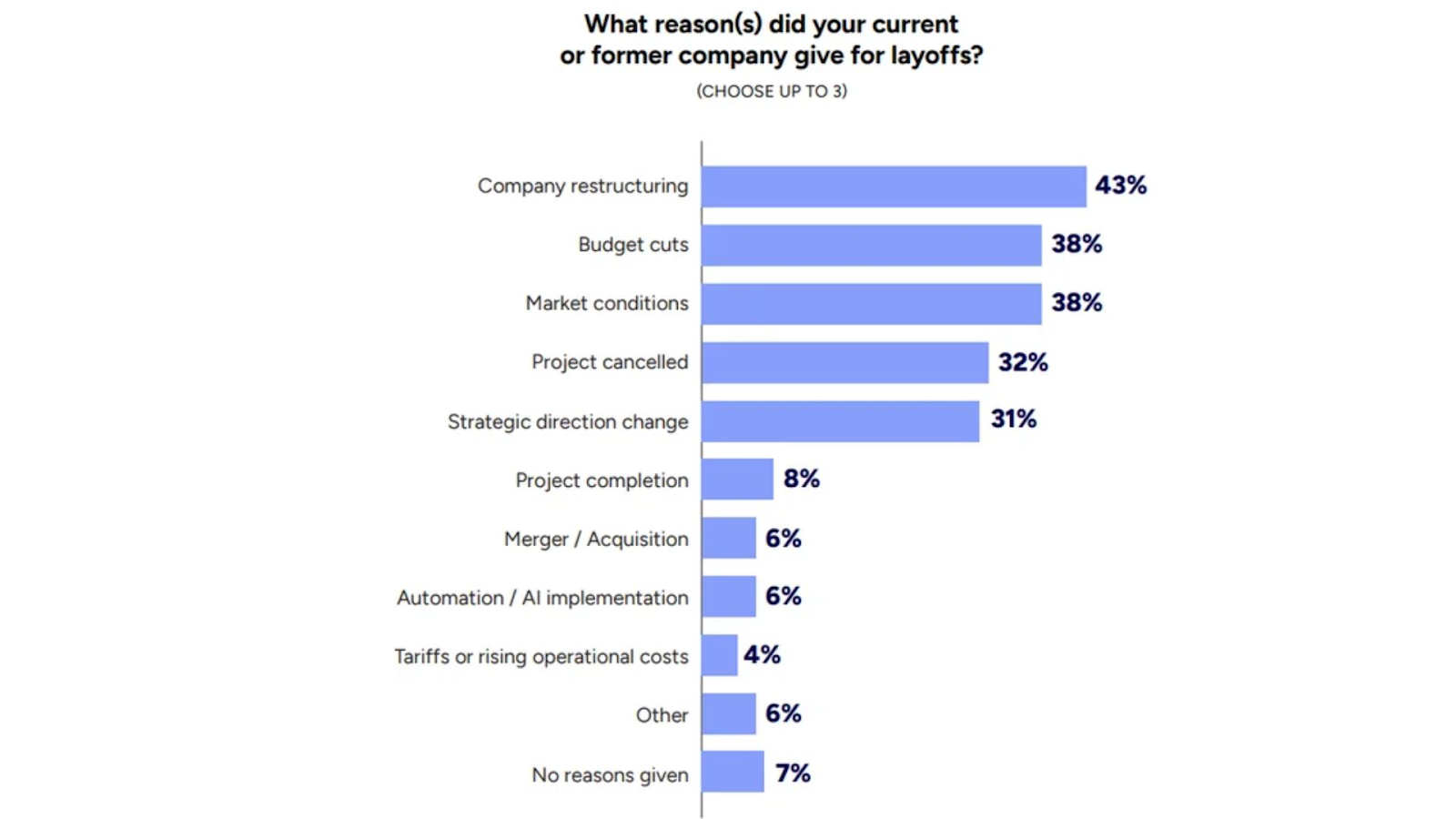
Though the report suggests that AI implementation only accounted for 6% of layoffs, the phenomenon has a palpable effect on executive-level decision-making.
It’s highly likely that in many circumstances, ‘company restructuring’ or ‘budget cuts’ are framed as ways to facilitate greater AI investment. For instance, Ubisoft recently invested in “player-facing Generative AI” following a series of layoffs.
The layoffs will likely remain a defining facet of the industry in the coming years. Those affected deserve better.
About the Author