You can trust VideoGamer. Our team of gaming experts spend hours testing and reviewing the latest games, to ensure you're reading the most comprehensive guide possible. Rest assured, all imagery and advice is unique and original. Check out how we test and review games here
The latest installment in the superpowered My Hero Academia fighting games series, My Hero Academia All’s Justice, is more than just a cash grab aiming to capitalize on the success of a beloved anime. The title offers an engaging spectacle with detail sufficient to please fans of all stripes. However, a relative lack of mechanical depth and repetitive side-missions prevent All’s Justice from standing apart from the pack.
For any successful anime, the emergence of an arena fighting game tie-in is as inevitable as death or taxes. Superheroic young-adult series My Hero Academia does not escape this pattern. Developer Byking has crafted a serviceable offering with My Hero Academia All’s Justice, which does right by the dramatic, charming, and unrepentantly adolescent anime upon which it is based.
Single-minded
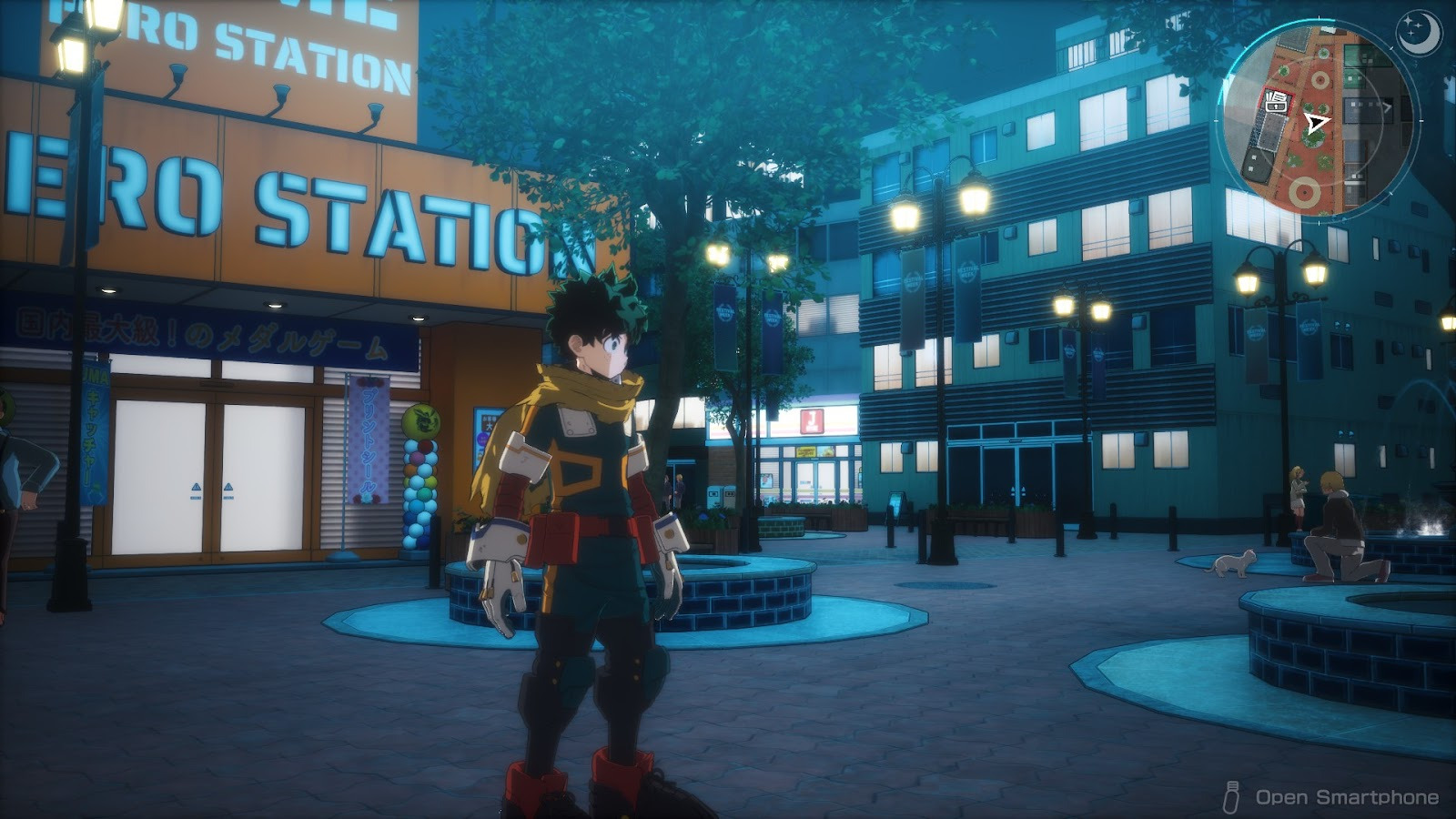
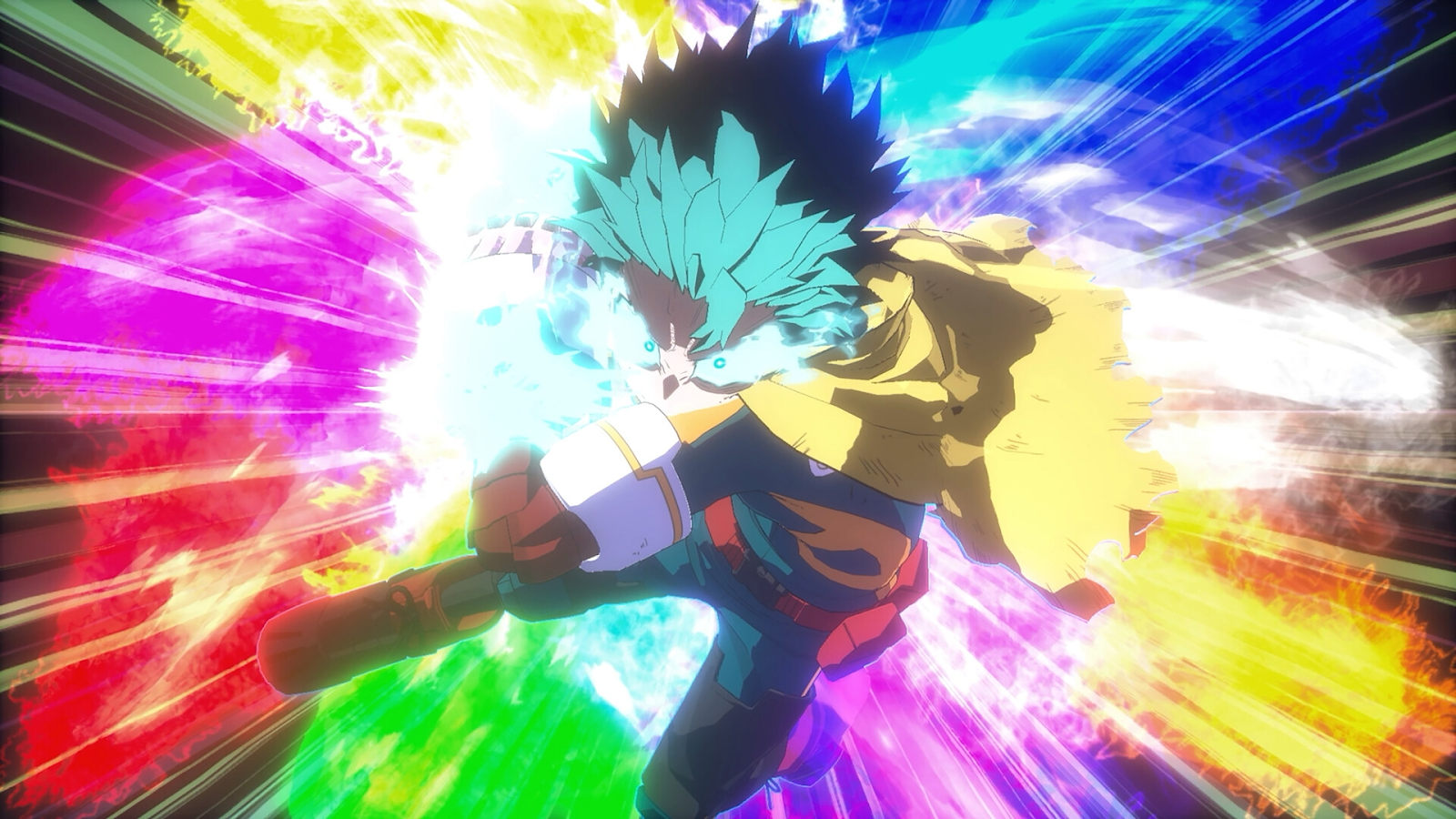
As the game opens, we are thrust into the middle of an intense showdown between Deku and Shiguraki, our plucky underdog hero and scenery-chewing villain, respectively. Hero Academia All’s Justice starts as it means to go on.
Despite the colorful spectacle, the fighting mechanics are kept simple enough to be extremely accessible; there are no complicated inputs or combos. This means nearly everyone can hop in and have a good time, heightening the ‘smashing action figures together’ experience.
However, this approach proves to be a double-edged sword, especially in the wider context of the fighting game genre as a whole.
Fighting games are synonymous with intricate, technical forms of gameplay. The inputs, the combos, and the sheer sweat that goes into mastering a character are part of the genre’s identity.
Conversely, for a game like My Hero Academia All’s Justice, the appeal lies somewhere between combat and pure spectacle. There is skill here in properly timing basic attacks and special moves in between blocking and countering. Deku and pals simply ask a lot less of you, the player.
For some, this is a feature, not a drawback, but those looking for a more gritty, technical fighting game experience will be disappointed.
Characters are constrained to fit extremely simple movesets, which often can do a disservice to their wide range of abilities. The character of Bakugo is a great example; he develops plenty of flashy moves in the course of the anime, yet his moveset here feels like a fraction of what he’s capable of in the source material.
Make my story
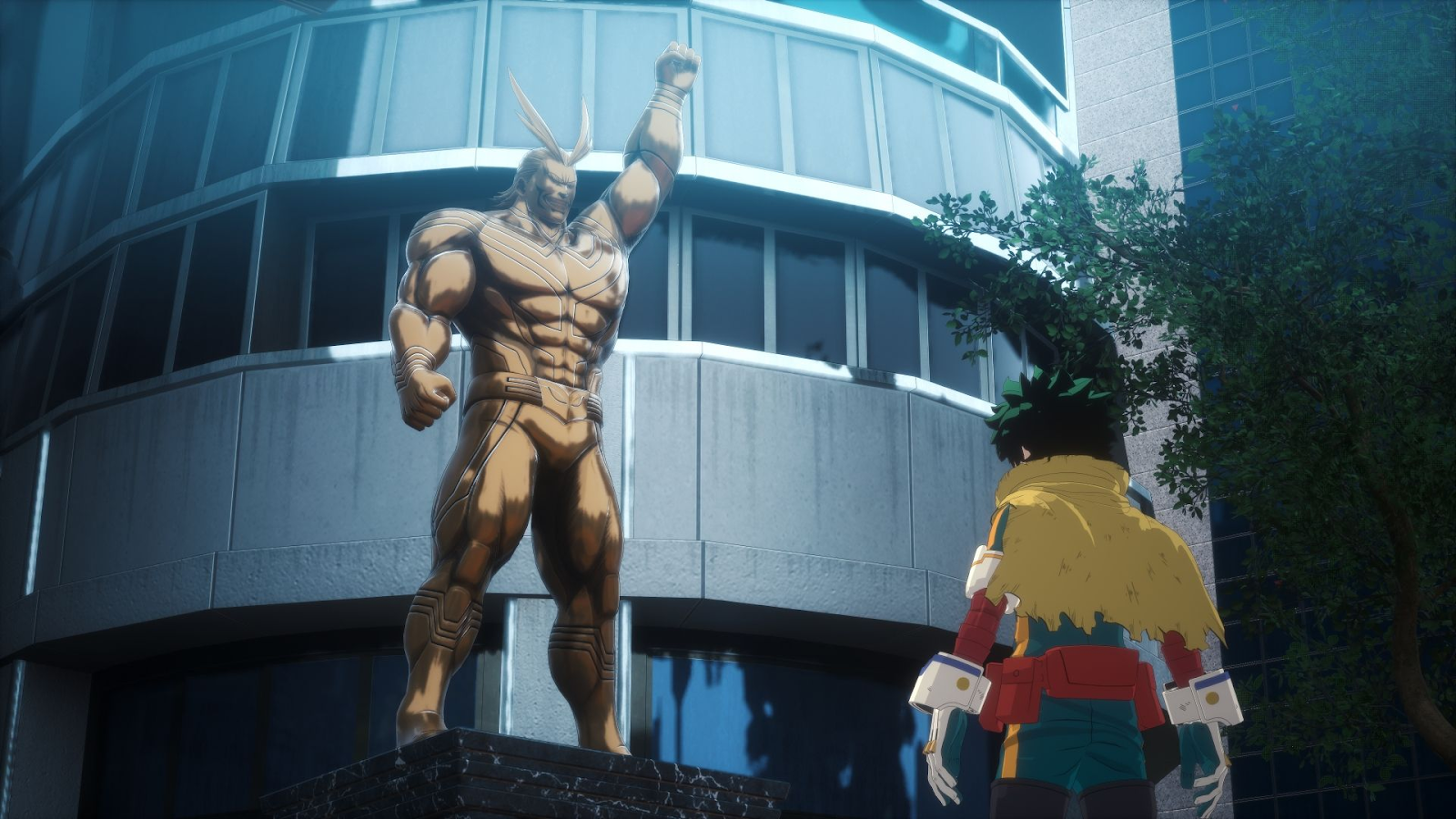
Shortly after the tutorial, we are taken to the genuinely very well-designed hub area. There’s a pleasant interactivity in having the menu be a well-designed hub area that invites you to take a step into My Hero Academia’s world – a pleasant touch that fans will likely appreciate.
The penchant for presentation continues into the All’s Justice’s strong story mode. The adaptations of key moments and set pieces from the series are loving and feel bespoke. The visual spectacle is enough to rival (and, at times, even surpass) the actual anime itself.
However, as with many anime-based arena fighters with a story mode, a big, unpleasant question rears its head: Who is this for?
The cutscenes are fantastic, but there is an undeniable feeling that they are wasted on an audience that has likely seen the source material in full. Yes, there’s spectacle and love on display, but much like a luxury train trip, All’s Justice is still very much on rails.
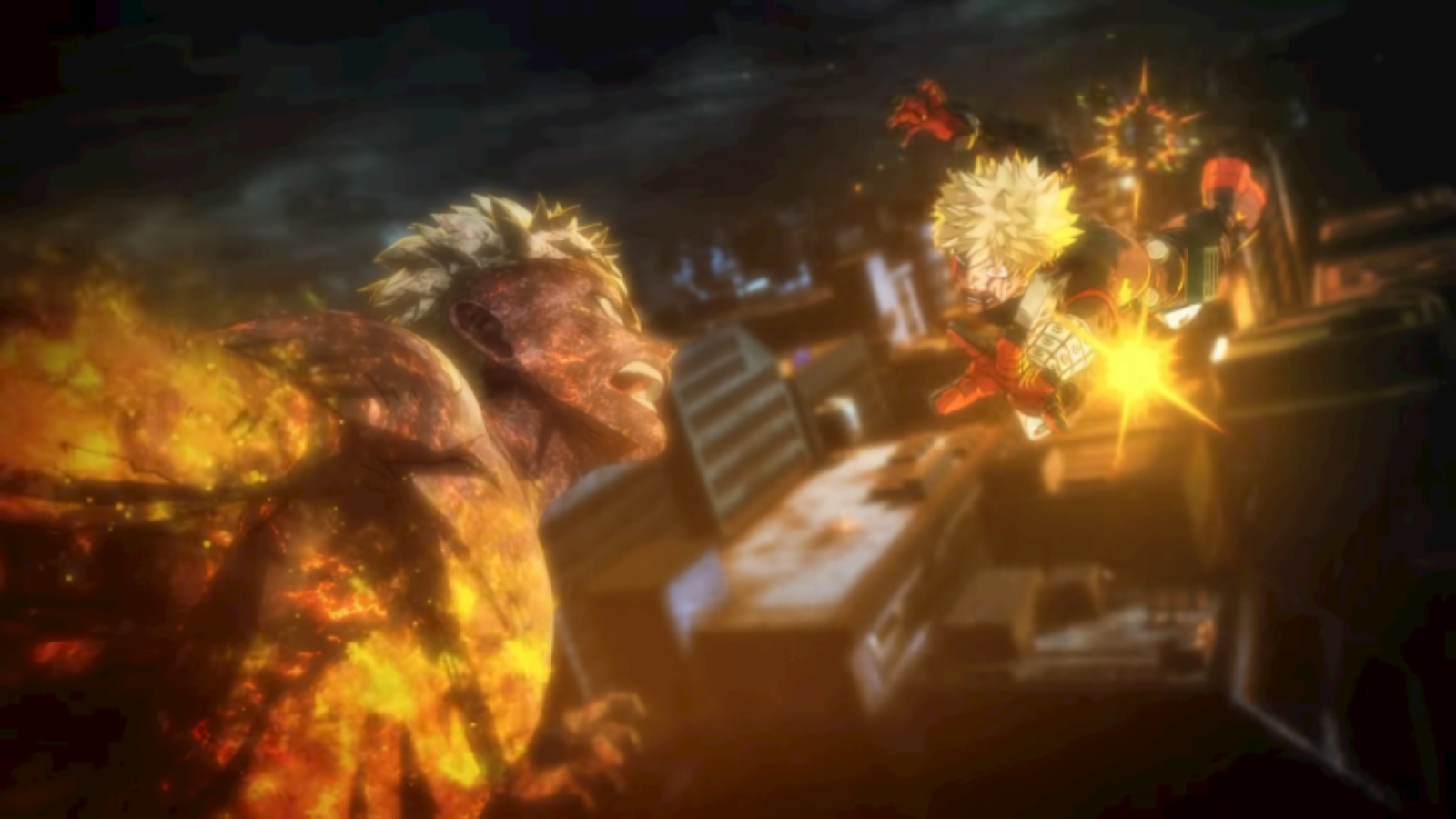
The ability to tackle what-if scenarios or explore potential fights that happened off-screen would have been amazing with a roster of this size. For its many advantages, the story mode feels beautiful yet hollow.
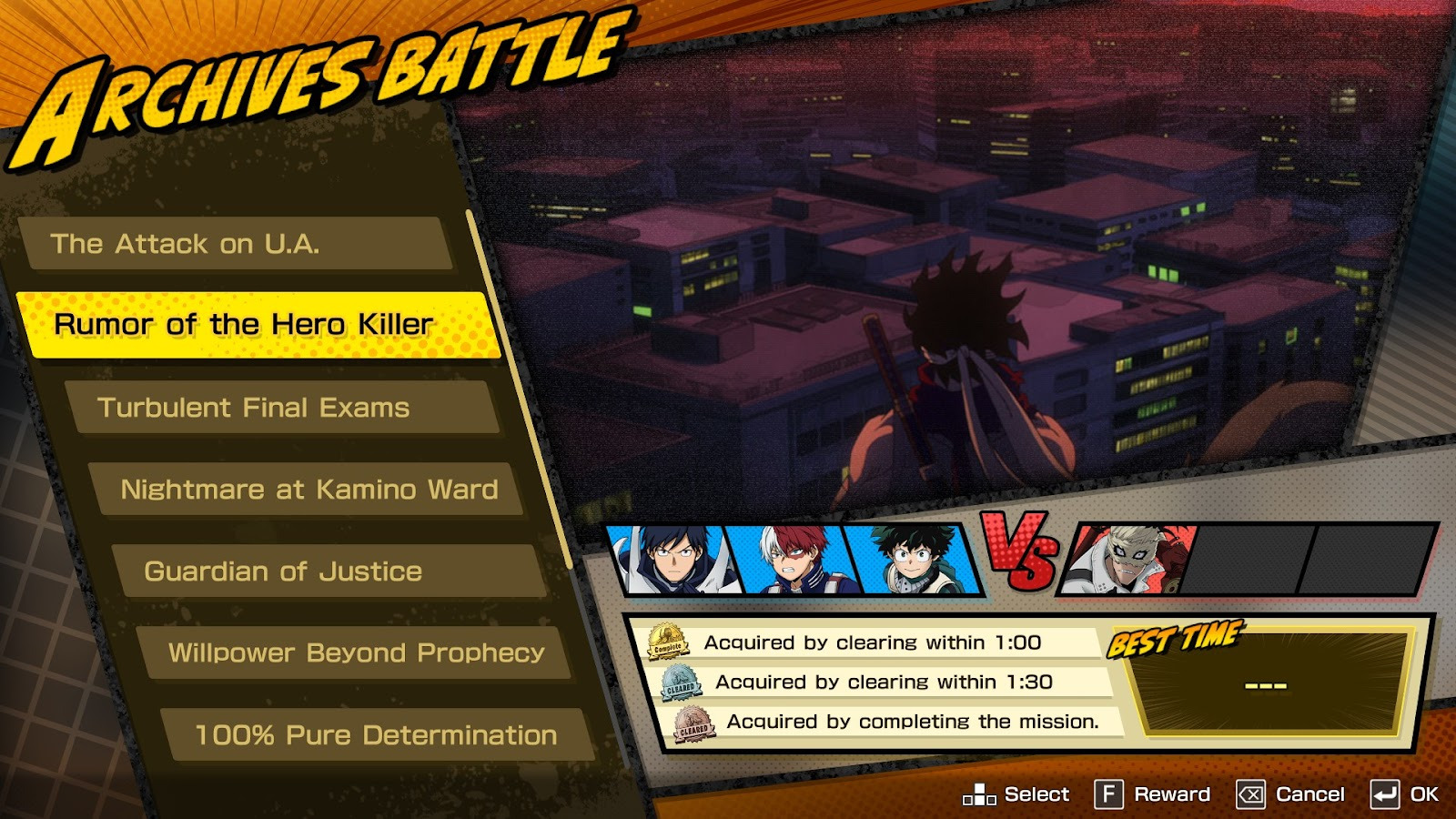
However, this is broken up slightly by archive battles, which allow you to visit moments from outside the most recent arc of the anime, often with a twist. While it’s mostly a collection of iconic moments, such as Deku, Todoroki, and Iida’s fight with Stain, the gimmicks, such as giant-sized enemies, are appreciated, and the presentation in the cutscenes remains a highlight.
Peace sign
However, in My Hero Academia All’s Justice, not all modes are created equal.
The team-up mission mode is an attempt to emulate the life of a hero academy student as you take on missions that are not just about fighting (though they are still mainly about fighting). This mode sees you running around open 3D environments, completing objectives, with an original story just for the game.
The issue here is that much of this feels like an afterthought. A lot of the objectives are uninteresting, borderline fetch quests where you run from objective to objective, all while the game attempts to pull on nostalgia to largely unsuccessfully contextualise the mission in something interesting.
The Hero’s Diary is a continuation of this, as it largely plays out in much the same way, with occasional bits of exploration or fighting. However, the greater focus on daily life interactions between 1-A students is appreciated in providing unique interactions that delight fans of My Hero Academia’s colorful cast.
Odd future
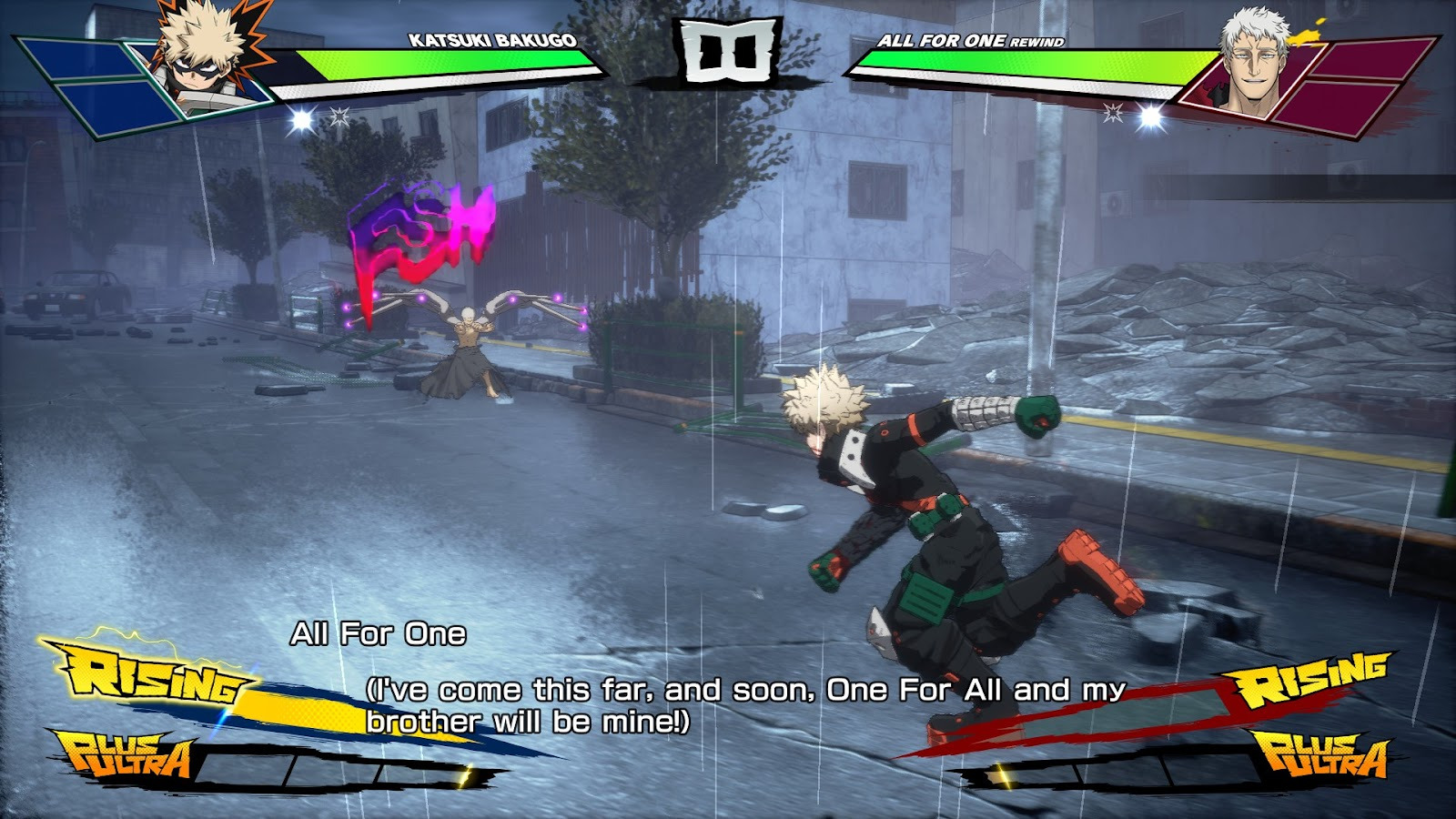
The My Hero Academia All’s Justice roster pulls from many corners of the series and serves as a pleasingly broad collection of action figures to smash together.
However, the impressive breadth of the roster means that omissions stand out more starkly than they might otherwise. Several fan-favorites are missing, including Spinner, Redestro, Mt Lady, and Star and Stripe. Though Star and Stripe is confirmed for season pass content, it is a little grating to have her arbitrarily paywalled.
The variety of some My Hero Academia characters also deserves a little attention. There is a bit of a Goku problem when it comes to plucky protagonist Deku, who gets quite a few forms as separate characters here, while others only get one.
In the majority of cases, this does not matter. However, when it comes to dramatic fan favourites with over-the-top moves like Todoroki or Bakugo, a separate character to capture some different parts of their movesets would have helped.
My Hero Academia All’s Justice feels bound by the form of the genre. However, for many, this will be enough. As a fan of the series, this is a beautiful toy box with action figures to smash together to relieve some of the pain now that the anime and manga have wrapped up.
Reviewed on PS5. Code provided by the publisher.
About the Author