You can trust VideoGamer. Our team of gaming experts spend hours testing and reviewing the latest games, to ensure you're reading the most comprehensive guide possible. Rest assured, all imagery and advice is unique and original. Check out how we test and review games here
It’s a pleasure to play MGS5. Not just in terms of controlling the game itself, although that is a delight, a rare mix of technical and artistic excellence, a genuinely odd game of the like we may not see again for some time. But it’s also a relief to just play MGS5, to leave behind the pre-game buildup, laden as it has been with more fake rivalries, vendettas, and petty squabbling than a thousand Super Sundays, and get on with it.
Letting the game do the talking – and, this being Metal Gear, there’s a lot of talking – reveals that, as expected, certain pre-release conspiracy theories simply aren’t true. Especially the one about Kojima’s name not actually being in the finished article (and the build that I played for 13 hours is, essentially, done). In fact, the opposite is true: Kojima’s name is everywhere. At the start of the missions that form the narrative backbone of MGS5’s open world, at the end of them, in the credits for those missions, crafted as they are like episodes of a TV show. It wouldn’t surprise if, when you invariably knock over a pot plant in one of the Soviet garrisons dotted about the Afghan landscape, you’d find his name on the bottom of them.
His fingerprints, too, are everywhere, as you might reasonably expect. Even if his name wasn’t everywhere, expunged in a fit of toy-throwing one-upmanship by Evil Konami, it would still unmistakably be a Hideo Kojima game. There’s an expectation that comes with Metal Gear instalments, for them to be stylish and over-the-top and to interpret the phrase magical realism in exactly that order, a world where flaming unicorns sit side-by-side with Clausewitz, where puppy dogs have matching scars – and temperaments – to their pragmatic, worn-out owners.
The Phantom Pain does all that, but not straight away. First there’s a prologue to wade through. Correction: wading is infinitely faster than the pace at which you move through it. Wading is a cocaine-fuelled Ferrari, an amphetamine-powered MiG, in comparison. I can’t say too much, as it’s NDA’d, but the prologue is intermittently both unbearably slow and really quite clever, a horror game in its design, frequently a horror in its execution. It’ll be interesting to see how it plays with the people who buy it on recommendation or marketing alone. Not well, I suspect.
Get through it, however, and what follows is excellent, an open world with all the accompanying side missions and outposts and collectibles and other dings-dongs to distract and delight – while also having the feeling of craft, of progression, of difference being made. To borrow a phrase from friend of VideoGamer Andi Hamilton, it’s the game Ubisoft always thinks it’s making with Far Cry, but never quite does.
Part of its success is down to the interplay of its missions and environments, player expectation and player fatigue, the waxing and waning of excitement and stress. Broken down into both main and Side Ops categories, and chosen from a menu, your sorties generally are either about moving the story along, taking out high-ranking members of the Soviet force occupying Afghanistan, building your army – or a little of all three. Side Ops don’t feel very side, in that regard: they loop into your main objectives, they weaken the enemy, they give you more resources. They matter, in a way that collecting feathers doesn’t.
/https://oimg.videogamer.com/images/2635/mgstpp_preview_10.jpg)
These ops are initially planned from the air, with your chopper dropping you in and at a point of your choosing (from a selection of LZs). Once there, it’s onto your horse and into the fight. Stealth is encouraged, of course, with players prompted to use their binoculars to tag enemies, to sneak into the many buildings and compounds. It’s possible to pull out the big guns, and given the setting, enemies, and time period (1984), you may be tempted to go Full Rambo III on the matter. But doing so – straight away, at least – seems against the spirit of the thing.
Your tasks are pleasingly multi-objective, from interrogating guards for info on specific targets you then have to find, to bombing multiple convoys at the same time with C4. They also facilitate multiple concurrent playstyles in a way that Metal Gear seldom has – a highlight being sneaking into a mountainside prison to rescue an important scientist, blowing my cover, and then calling in an attack helicopter to cover my escape by jeep. It feels like a natural evolution of everything Koj has learned, in both action and stealth. The short(er) mission length enables the developers to cram in smaller, but no less satisfying, arcs, action beats and close escapes, all packaged and played in bursts which go on just long enough.
Although these missions rarely disappoint, helped enormously by the beauty (and scale) of this Afghanistan, which could easily be a next-gen Red Dead and isn’t just a war-torn country but a country which also houses a war, you will tire of sneaking places, of shooting people, of encouraging your horse to go faster. Chopper extraction becomes a relief, especially as you have to escape the hot zone (a box, basically) before your ride will get you. And like Snake, soon you’ll be exhausted. Post-mission screens don’t revel in triumphalism – Snake looks old, knackered. You may feel the same way.
Which is why the return to Mother Base – a tranquil oil rig in the Seychelles, all blue skies and strong rays – works so well. Seeing it expand is one thing, bolstered as it is by the conscription of soldiers you kidnap from the field, each with a specialty. But as satisfying as a growing empire is, the simple portable shower that enables Snake to wash the blood from his uniform is just as appealing. It’s the first thing I do when off-mission: Kojima has long sermonised on the wearying, ever-rolling wheels of war, the near-infinite cycles of power and conflict. It’s only really in The Phantom Pain, however, that the player gets to approach the feeling of being as tired (even if for a few minutes) of it all as Snake does.
That will all fade, however, replaced with the compulsive need to upgrade Mother Base, to return to the field, to plough further ahead, to literally get back on the horse. It helps that Afghanistan is a marvel: intricately rendered down to the smallest stones, it’s both intimidating and beckoning, beautiful and dangerous. A nice place to ride a horse around, you’d imagine, if it wasn’t for the bloody great war going on inside of it. The juxtaposition of Afghanistan and Mother Base complement each other perfectly.
After all the back-biting, name-calling, theorising, and straight-up bullshitting, Metal Gear Solid 5 is as it always appeared to be: an evolution of the systems and mechanics that Kojima has been working on for years, a stealth game that feels less like you’re infiltrating a closed set and more like you’re running a war. Its weirdness, eccentricity, quirks – men being hoisted away by balloons, dogs that wear eyepatches, etc – only add to the experience, not detract. It’s an outlandish world, but not an incongruous one, where the oddities of it add to the experience, rather than expose it. Barring total f***ing disaster – and he’s more than capable, as MGS2 proved – this will be quite the swansong for Kojima. If he goes, of course.
Check the video below for gameplay footage and more of our impressions:
About the Author

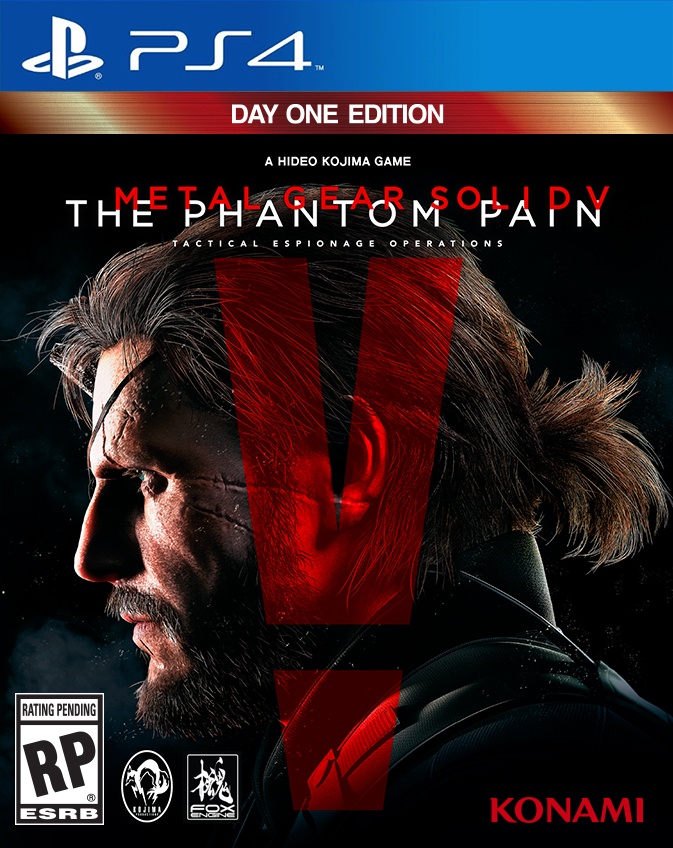
Metal Gear Solid 5: The Phantom Pain
-
UnknownUnknown
- Platform(s): PC, PlayStation 3, PlayStation 4, Xbox 360, Xbox One
- Genre(s): Action, Stealth