You can trust VideoGamer. Our team of gaming experts spend hours testing and reviewing the latest games, to ensure you're reading the most comprehensive guide possible. Rest assured, all imagery and advice is unique and original. Check out how we test and review games here
With the release of Pokémon Legends Z-A, Pokémon has taken a bold new step by morphing its turn-based strategy into real-time combat. The moment it turned away from this tried-and-true formula, Digimon seized the opportunity to take the systems Nintendo had spent nearly 30 years perfecting and prove it could do them better.
Tired of being placed under Pokémon’s shadow, Digimon Story Time Stranger implemented various imaginative new features in its gameplay and Digimon growth mechanics that gave the franchise the means to step out of it. These improvements prove that Pokémon can’t rely on outdated ideas for much longer. Just like its new real-time combat, it has to get bolder and more experimental by giving players the same freedoms that Time Stranger offers.
- Pokémon Legends Z-A has taken a bold step forward in its combat, but two steps back in its worldbuilding.
- The personality system in Time Stranger plays a vital role in connecting you to each of your Digimon.
- Digimon in Time Stranger are characterized in unique ways, making each memorable and endearing.
- By combining innovative combat systems with more player autonomy, a more impressive Pokémon game of Z-A’s scope could be made in the future.
City limits

While the iconic environment of Lumiouse is full of references and home to fan-favorite Pokémon, Pokémon Legends Z-A’s lack of adventurous spirit makes it hard to stay engaged. Being restricted to its streets means it relies on nostalgia hits through returning features like mega evolution. Resurfacing old ideas may satisfy the X and Y enthusiast in me, but nostalgia does not make me feel any more connected to my Pokémon than I already am.
The real-time combat is easy to get invested in and suitably experimental for the series. But the lack of creative ideas outside of combat meant I was consistently looking for the next battle to see something new. There is only so much you can understand about the Pokémon world when restricted to just one of its cities, making it hard to truly understand your Pokémon, where they come from, and your place in the vast Pokémon world.
I found the limitations this concrete jungle put on me were far more apparent after just traveling there from the free-spirited Time Stranger. Setting the story between two drastically different worlds offers colorful, creative environments, creating a liberating experience that has you excited to see what’s around the corner. Not only were the environments novel, but the oodles of characterization in each new Digimon model and special attack made me eager to see how each was depicted.
Time Stranger takes the turn-based battle system that Pokémon has stuck to for decades and brings the most out of the formula. It combines the attribute and elemental attack weaknesses seen in Digimon Story Cyber Sleuth and Hacker’s Memory with new attachment skills and agent skills. By mixing this system with this wide choice of unlockable skills, you have far greater control and room for experimentation around how you want to buff your team. This makes me eager to play again with new Digimon and new agent skills, having barely scratched the surface of the various matchups and variety of skills during my first playthrough.
Lacking personality

The effect Pokémon’s natures have on their stats is as minuscule as a Joltik. Their natures realistically only come into play during competitive matchups, so there is little reason to remember that your Fletchling is hasty or your Eevee is calm.
By incorporating new personality skills, Time Stranger significantly strengthens your bond with your team. Each conversation with your Digital pals does more than just help them gain the skills best for them; they make you care far more about collecting and raising your favorite Digimon. Your chats turn them from replicas of marketable creatures into compelling characters whom you’ve laughed, smiled, fought, and spent time with.
You quickly lose track of the Poké Balls you’ve thrown and every Pokémon you’ve stored away in boxes during your quest to catch them all. Time Stranger, meanwhile, had me remembering each Digimon I materialized, the amount of which was barely a quarter of the Pokémon I caught.
Encountering them enough times beforehand means getting to know them before they join your team as an ally, making it feel far more personal when they become part of your squad. I found myself thoughtfully considering my options and each Digimon’s potential for evolution, debating which of the multitude of paths would suit them best and which attributes and elements would address my weaknesses.
The absence of rideable Pokémon only makes the lack of characterization in Pokémon Legends Z-A more apparent. As soon as this feature was removed from the Pokémon Legends series, Time Stranger provided a total of 173 rideable Digimon with unique animations and movement patterns. This wide range of animations makes Digimon in Time Stranger feel more alive, making it apparent that excluding rideable Pokémon was a missed opportunity.
Raise your voice

Pokémon Legends Z-A has turned the jarring absence of voice acting in Pokémon games into an inexcusable fault. No matter how customizable your trainer may be, the lack of voices turns even the most impactful scenes into pretty yet indecipherable pictures.
Although the translation of Time Stranger leaves room for improvement, the voice acting breathes newfound life into each character and Digital pal. From new English voice lines for iconic Digimon to emotional performances like Allegra Clark as Inori Misono, the emotions delivered in each line provide a stronger connection to each character. They reinforce the dynamics not just with your agent, but between them. I would not have understood how much Aegiomon and Inori meant to each other or the weight of Aegiomon’s responsibility had there been no voices in their scenes.
Without knowing the tone of each line, players are left struggling to understand the motivations of each character in Z-A. Is Emma meant to be worried or excited? Is Urbain talking to me or someone else? These are questions I never had to ask during Time Stranger, where the voice acting carries you through the ever-changing emotions of each story beat and effectively conveys the dynamics among the characters.
Where’s the bonding time?
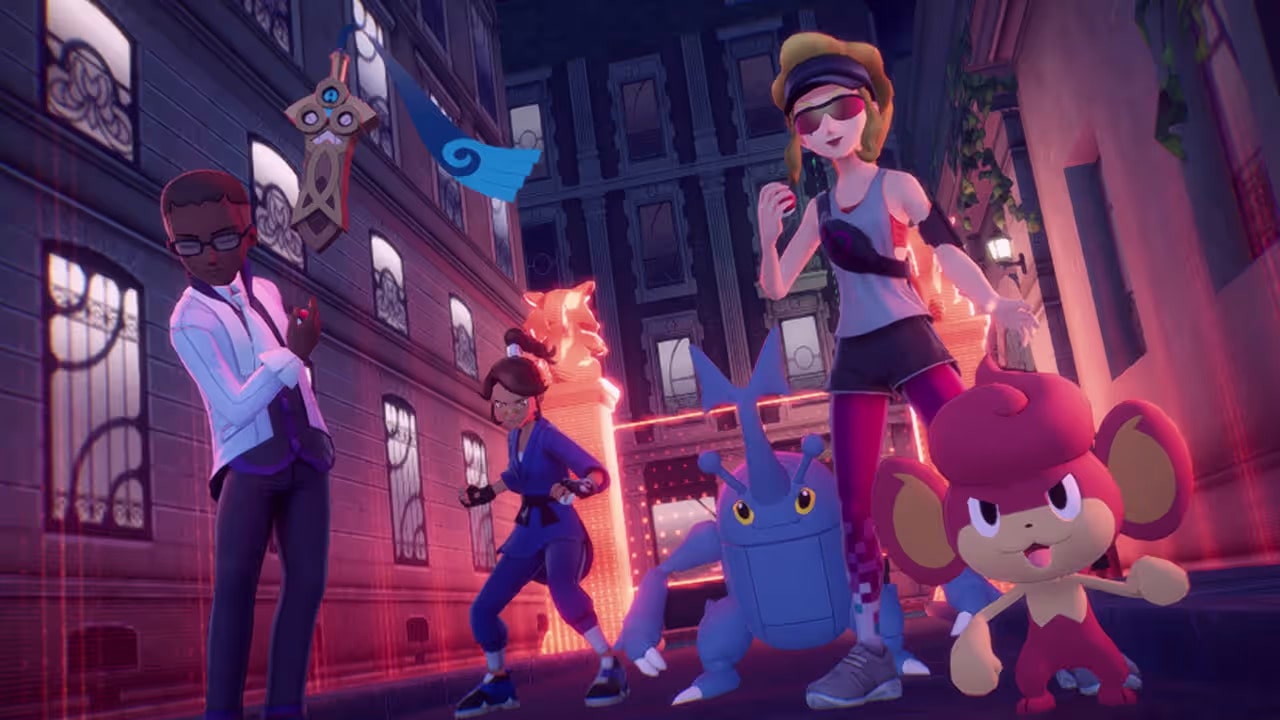
Pokémon Legends Z-A makes Pokémon more combat-oriented than ever before. Here, Pokémon truly are the sum of their strengths, making it easy to judge them by their moves, how these moves work in relation to the new combat system, their abilities, and if they can mega-evolve. While this is a side effect of testing a new battle system, there was a missed opportunity to characterize each mon more outside of combat.
Keeping the experience linear has its merits, but it limits how much there is to connect with. While the story is still personal, limiting it to a single city means fewer experiences to gather with your team and less time to form true bonds.
Meanwhile, Digimon Story Time Stranger has never made Digimon feel more full of life and unique from one another. The creativity and experimentation in each element — from environments and combat skills to Digimon personalities — make the journey to save two worlds and aid Aegiomon in his mission feel deeply personal.
This player autonomy and the unique nature of each Digimon are what make Digimon Story Time Stranger gel with its players. With any luck, future Pokémon games will be able to make me feel as close to my Pokémon team as I do my Digital pals.
FAQs
Pokémon Red and Blue were first released on February 27th, 1996. The Digimon Adventure anime started three years later on March 7th, 1999.
Digimon has not found as much success due to being overshadowed by Pokémon in the US market. Debuting during peak Pokemania, Digimon was seen as a knock-off of Pokémon despite having different inspirations.
No, Digimon are inspired by the Tamagotchi V-Pet and were created as a masculine counterpart.
Certain Digimon are more powerful than Pokémon, most notably Omnimon, who has the power to rival the likes of Arceus.
About the Author