You can trust VideoGamer. Our team of gaming experts spend hours testing and reviewing the latest games, to ensure you're reading the most comprehensive guide possible. Rest assured, all imagery and advice is unique and original. Check out how we test and review games here
Cutting through hype can be a difficult thing. It’s easy to get caught up in wave upon wave of excitement and anticipation as publishers drip feed us game hacks tidbits of information in the run up to release. Announce a new character, announce a new game mode, announce anything new, just to keep us interested. Or, in the case of Quantic Dream’s Heavy Rain, described by writer/director David Cage as a narrative experience during a behind closed doors demo at Leipzig Games Convention, announce just what the bloody hell it’s all about in the first place.
Cage begins the 40-minute presentation with a history lesson. He recounts 1999’s Omikron: The Nomad Soul, the studio’s first title, and 2005’s Fahrenheit, “a game where we tried to use for the first time the idea that a story could be played”. He then talks about ‘The Casting’, a prototype that attempted to recreate natural emotions in a virtual performance. So impressive was the demo that Sony asked Quantic Dream if they could use it in their E3 2006 booth the year of the PS3’s release. “It was quite a boring demo when you think about it,” Cage explains. “It was a woman talking to a camera sitting in a kitchen for five minutes.” But the interest and excitement surrounding the video convinced Cage and co that Heavy Rain could not only work, but, crucially, could prove a commercial success, too.
Cage says a few key philosophies underpin what Heavy Rain is all about. The first is that it is a story driven game. “The story is not told in cut scenes like in most games,” he says. “It’s told through player’s actions. You don’t watch the story, you actually play it. Your decisions affect the way the story is told. At the same time you’re not only the actor, but also the writer and the director of the experience.”
It’s emotionally driven – “Our characters are not just a bunch of dead pixels on screen. They are real living and breathing characters.” The story and subject matter are adult – “We won’t tell you a story about the knight who needs to save the princess from the dragon. We’ll tell you a story about real people, in real life, having real problems.” And last, but not least, the game will be accessible to a broad audience – “We believe that the challenge should move from the controller to the player’s mind.” Cage talks about “bending stories”, using a rubber band analogy. “The player can stretch and deform the story based on his or her actions. But whatever you do the backbone of the story is always there. It allows us to maintain the consistency of the story whatever happens.”

So far, so good. But it’s all talk. This is Morpheus explaining to Neo that you cannot be told what The Matrix is, you have to see it for yourself. Well, we’re about to see it for ourselves. Cage’s Quantic Dream colleague boots the game up and we’re in.
“We believe we have the best looking menu of the show,” says Cage with a Cheshire cat smile. He’s right. The widescreen television we’re staring at is filled with an extreme close-up of a woman’s face, focused squarely on her eyes. Boring, you might say. But it’s not. In fact it’s quite the opposite. It’s one of the most compelling, entrancing things we’ve ever seen pumped out of a games console. Her eyes are so detailed they look real. We can see the whites of her eyes, reflections, depressions, everything as it should be. They dart from side to side, as if in REM sleep except with her eyelids open, motion captured, Cage explains, not animated. The skin on her face is astonishingly detailed, with pours, marks, shadows and freckles visible with crystal clear clarity. It’s stunning stuff, all in real-time 3D, and not CG. If this is just the menu screen, we ask ourselves, then what’s the actual game going to be like? We’re about to find out.
The demo begins with the woman, a journalist, riding a motorbike on an unknown US freeway, heading towards the address of a taxidermist, Leyland White, a man suspected in the investigation of a spate of female murders. It is, as you’d expect, pouring with rain. She arrives at the house. An ominous, Resident Evil-style string melody plays over the sound of the rain beating down on the ground. She gets off, takes off her helmet and we see the rain cascading down the skin of her face. It’s hugely impressive.
She begins walking around outside the house and we start to get an idea of Heavy Rain’s interface. R2, no matter where the camera is, will always make your character move forward. The right analogue stick allows you to move wherever you want in combination with this. With the left analogue stick you can control the head and shoulders of the character, so you can look on the left and start walking on the right, for example. “This is what you do in normal life,” explains Cage. “We believe the benefit of this system is so huge, but also that you get used so quickly to it that people after a couple of minutes will forget about it and just go where they want to go.”

Similarly to Fahrenheit, a small arrow pointing upwards appears on the bottom right of the screen as she approaches the mailbox. This arrow shows you how to interact with the mailbox, with the right stick, but you can also define the speed, something that will prove to be important later, Cage explains. She checks the garbage, and discovers a woman’s shoe covered in blood. Not a good sign. At the front door a few interaction options are presented, which can be cycled through with the d-pad. She knocks – no answer. She tries the door bell. No answer. There are three speech options that appear on-screen above, to the left and to the right of a graphic of the Sixaxis. To select one piece of dialogue you need to move the Sixaxis in that direction. “Mr. White?” But she is not stuck in this dialogue. She can interact with the door, move away and talk all at the same time, at the player’s whim.
She tries the garage door by the side of the house. “Locked, obviously. What did I expect?” As she’s walking her head will turn towards points of interest, providing visual clues to the player. She spots a window that’s ajar, but it’s too high to reach. She uses a big barrel, moved by mashing Square. By flicking the Sixaxis forward she kicks it forward. Mashing Circle lifts it up. “Each time strength is required you have to press quickly this button. Each time you need to kick or hit something you need to do the same move with your controller to hit it. Everything is about immersion in the interface. We need to emulate what your character does to make you feel the same way.”
She climbs up on the barrel. Here we see the contextual thoughts system, which allows you to hear the thoughts of your character at any time in the game. Similar to the dialogue interface, you press L1 and select from different options by moving the Sixaxis. Right now there are two options: daring and caution. “She gives you the pros and cons. You can do it but there is a risk. But if I don’t do it, I won’t learn anything. She doesn’t tell you what to do.”
She struggles as she opens the window, as does Cage’s colleague – he’s rigorously shaking the Sixaxis. Inside is a dank but normal looking home interior. Furniture, nik-naks, ornaments, everything you would expect to find. Cage explains that there won’t be any loading within levels, despite the graphical quality. Everything is 3D, including buttons on the oven. The living room is realistically sized – she brushes a bottle as she walks past – a QTE triggers, press Triangle to catch it before it drops and smashes. This won’t be the last QTE we see in our Heavy Rain demo.

The only prerequisite to interaction is that she first must look at the object with the left stick. This, Cage says, negates the problem other games have where you struggle to find the exact spot required before interaction is possible. She does this with the living room couch, first looking at it then sitting on it. “You don’t need to fight with the character to make her do what you want her to do.”
“Everything in this set is interactive,” Cage explains. You could watch TV, sit in the rocking chair, sift through all the cupboards and drawers. She approaches the fireplace, where burnt clothes sit. She moves into the garage where she spots a trail of blood. Things are heating up. The door switch begins to open the garage door before it jams. She spots a chainsaw lying about as she moves back into the main house.
Upstairs she enters the bathroom, where an overpowering smell forces her to cover her mouth. Inside the bath itself is the body of a woman. She stumbles back in shock, before composing herself and reporting to her tape recorder. She moves down the corridor and enters one last room. The music ramps up – crazy strings busting out of the speakers. Inside is what appears to be a woman in a nurse’s uniform locked in a crazy fixed smile as she sits cross-legged on a couch. She inches closer and discovers that the woman is, in fact, stuffed. There are more similarly stuffed women dotted about the room.
She starts taking pictures – she’s a journalist after all. She’s about to leave when a car pulls up outside. Guess who – it’s the taxidermist. The strings ramp up as he enters the house, then bang, the screen splits in two – a third on the left showing us the taxidermist’s actions, two thirds on the right the normal view. “Oh shit!” says Cage. “The taxidermist is back and we’re stuck in his house! We’re in trouble.”
Things start getting frantic. She looks around everywhere, trying to spot possible escape routes or objects to interact with. She creeps out and down the stairs. Cage’s colleague triggers her thoughts so we get a sense of her panic. He’s sitting on the couch, watching TV, drinking beer, oblivious to her coming down the stairs. She opens the garage door very slowly with the right stick – it jams. She rolls underneath and heads for the bike. It won’t start – you have to mash Square to get it going. Then you drive off, safe from the murdering taxidermist.

“That was cool,” says Cage. “He didn’t know we were here. That was fine. That was one possible story. But what would have happened if we had broke the bottle? Or left drawers or cupboards open? When the taxidermist came back he would have known something had changed and suspected someone broke in his house. This is where we reach the point where we bend the story.”
Cage loads up the game just before the taxidermist arrives, in the bathroom. The taxidermist is driven by AI. Cage doesn’t know what he’s going to do. This time she hides. You need to press and hold buttons to stay hidden. This is an uncomfortable position so you have to press buttons in awkward positions to simulate the same feeling. He walks past the bathroom. You leave and see him talking to his stuffed women in the left hand side of the screen. This time you walk too fast and step on a creaking floorboard. He spots you and gives chase with a knife. You hide in a cupboard, having to press four buttons this time to simulate how uncomfortable your character is. He checks under the bed before noticing the cupboard door ajar. You fight, having to mash buttons to fend the much larger taxidermist off. You run downstairs, all the time Cage’s colleague is in control. This is not a cut scene. She stumbles at the foot of the stairs as he misses a QTE, bruising her cheek. She frantically looks for an escape, for something to use. You run into the kitchen, trying to open the door. More scuffles – she kicks him back. She heads for the garage door, enters, ignores the chainsaw before rolling underneath the jammed door. Once again the bike engine won’t start – but just in the nick of time it does, and she speeds away, leaving the taxidermist standing in the street in the pouring rain.
“We could play the same scene five times, 10 times, 20 times and show you different variations,” says Cage. “This was just two walkthroughs. We could kill the taxidermist. We could use the chainsaw. We could use screw drivers. There’s also a gun hidden somewhere in the house. But also he could have killed us. We could have hidden and called the police using the phone.” There are many places to hide, many chances to escape, and plenty more places to fight. “Now you know what Heavy Rain is all about.” Well, we have a much better idea of what it’s all about.
There will be around 60 scenes in the final game each with a similar level of complexity and mature tone. Quantic Dream is working with script doctors from Hollywood to make sure the story is as good as possible, Cage explains. Each one will have unique gameplay, presenting unique challenges to the player. The environments will be varied, too, ranging from the small to the huge. “We’re not making a video game,” he says. “We’re making a narrative experience.”

It reminds us in some respects of those old play your own adventure games. Each action has a consequence and you have to continue the story in this way. During the chase sequence she fell down the stairs and bruised her cheek. That bruise will remain with the character during the rest of the game. If your character is injured it will continue injured. If your character dies, it is dead.
Heavy Rain might well turn out to be the best looking game ever made. Even in its current state its above and beyond anything we’ve seen not only on a console, but on PC, too. And while we know absolutely nothing about the story, or the main character, (the demo we were shown will appear on the disc as a bonus scene and shouldn’t be taken as any indication of the main story) we’re confident it’ll be up there with the best electronic entertainment has to offer, simply because Quantic Dream has proven its plot credentials with the captivating Fahrenheit.
Our only concern surrounds the controls, which will probably only take a while to get used to, as Cage suggests. QTEs don’t float our boat, so it was a tad disconcerting to see so many during the second escape sequence. Cage promises that the QTEs won’t be game breakers – forcing you to replay whole scenes if you miss-time a button press, so that should soften the blow somewhat. “You’ve got several chances to tell the story you want,” Cage says. “There will be some failures and some success but if you have enough success you will continue. But if not there will be a consequence to your actions.”
It all depends, of course, on how frequently they’ll pop up, which is currently a mystery. We’re not fans of button mashing or waving the Sixaxis about about either, which we saw plenty of during the demo. Essentially, however, the concerns we have about Heavy Rain’s controls are based on speculation. The real test will come when we actually get our sweaty hands on with the game. Until then, let’s just sit back and enjoy the hype.
Heavy Rain is due out exclusively for PS3 late in 2009.
About the Author

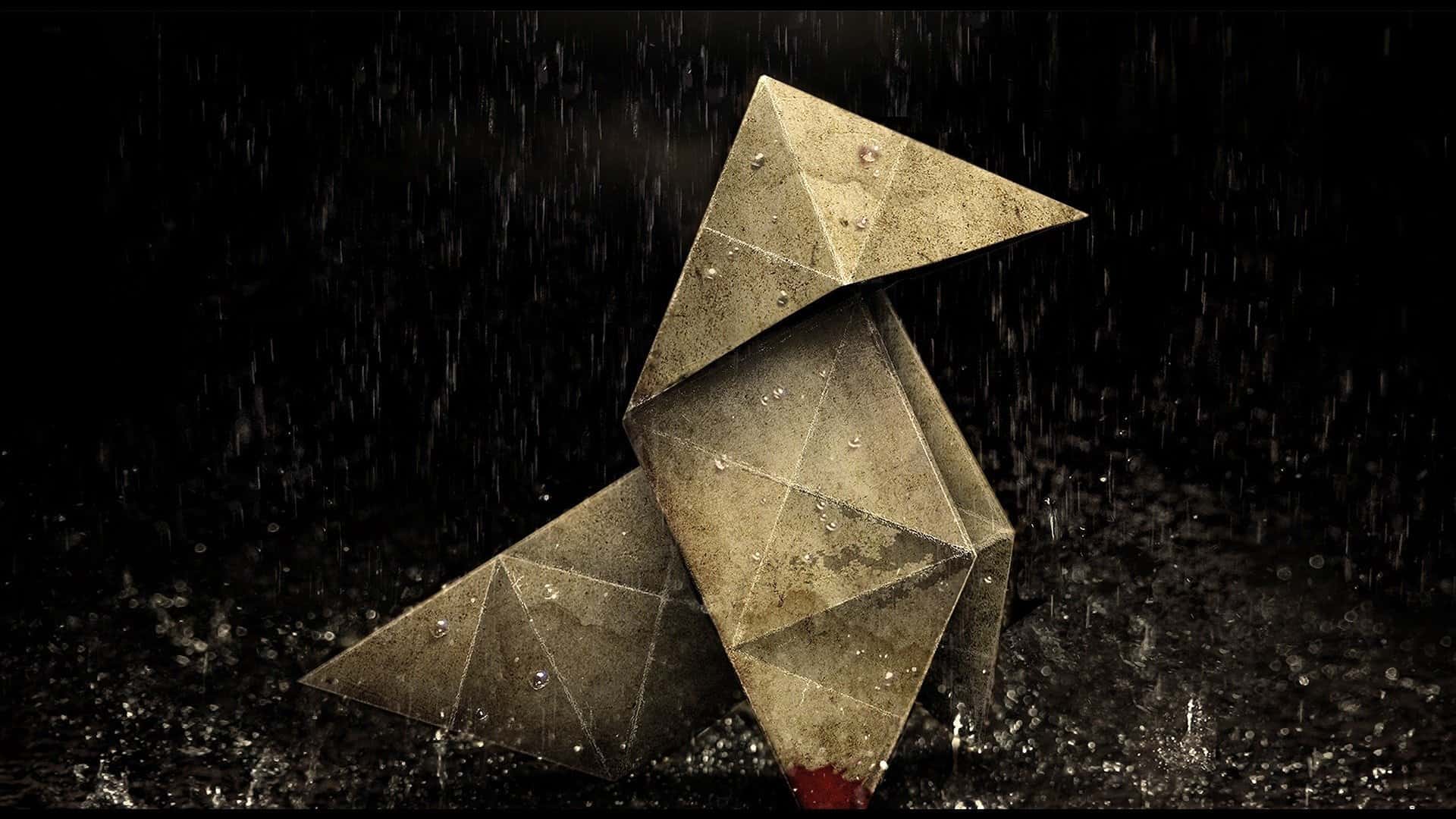
Heavy Rain
-
UnknownUnknown
- Platform(s): PC, PlayStation 3, PlayStation 4
- Genre(s): Action, Adventure, Third Person