You can trust VideoGamer. Our team of gaming experts spend hours testing and reviewing the latest games, to ensure you're reading the most comprehensive guide possible. Rest assured, all imagery and advice is unique and original. Check out how we test and review games here
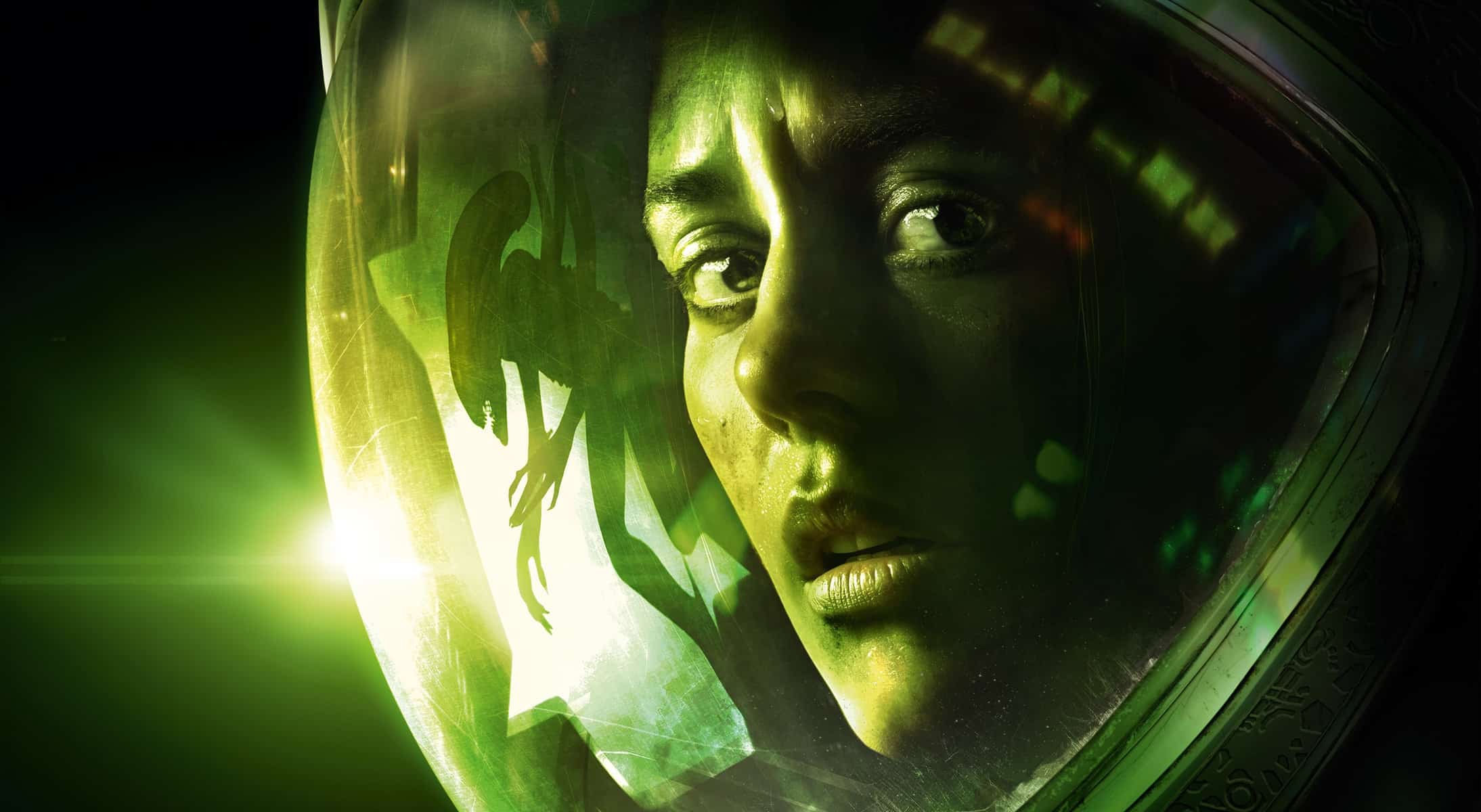
After playing six hours of Alien: Isolation’s preview build it is clear that the game’s greatest strength could turn out to be its most glaring weakness. Isolation’s remarkable power lays in the familiarity of that iconic production design, replicated near-perfectly here, which works in tandem with the creature itself to give the game its signature feeling of disconcertion. For a generation, this world is etched into a collective psyche. To actually walk through it is both familiar and frightening, a dream-state of fake memories that feel as real as anywhere else you’ve been.
Returning to it following a break in play is akin to realising you’re back in a constantly-recurring nightmare. Isolation’s Alien operates much like the boogeymen that chase you when you sleep: it operates out of frame for 99% of the experience, but it is always there, thumping around in vents or hissing malevolently from afar. Worse, it imbues even the most innocent rooms with The Nameless Dread. Like the movie it’s based on, once you’ve been exposed to the Alien, it’s everywhere.
Isolation is, in terms of pure atmosphere, a masterwork: even if it had the blueprints handed to it by someone else, The Creative Assembly still had to make it work interactively, something no-one had been able to do. It has succeeded in its mission, but in doing so has succumbed to some very videogame-specific faults.
Chief among them is the mission structure, which sees Ripley as a glorified errand-runner, constantly hunting around the vast space station Sevastopol for parts to open doors or surmount other rather mundane obstacles. This isn’t unexpected – a running theme of the first three movies is resource management and scavenging.
/https://oimg.videogamer.com/images/0c4b/ps4_online_preview1.jpg)
Those movies aren’t six hours long, however, and much of the tension is built upon forward momentum, or rather it being impeded. In Isolation, it feels as if you’re moving forever sideways, and as such it soon becomes rather stale to have to find yet another computer terminal and recover a passcode off of it, or a cannister of coolant to open one of many perpetually-locked doors.
In one instance, players are tasked with navigating an electrified floor in a manner utterly reminiscent of the original Half-Life. The ‘puzzle’ wasn’t fun then, and it certainly isn’t so now. You also encounter fellow survivors who flout every rule the game painstakingly establishes (such as indiscriminately firing their weapons when they know the Alien is close by), breaking the immersion near-instantly.
These phoned-in elements are at odds with the excellence on show elsewhere, not least the Alien itself, which is superbly crafted in a physical sense (it’s actually much taller than the player, for once, and the way its tail often signifies its presence is frightening). It’s impressively built, but Alien Isolation’s real genius may turn out to be found in the way that, over the course of a few hours, the player’s relationship to the beast changes.
Not that you’ll be buying it flowers, or asking it to borrow 20 quid off of it until next Monday. But there’s a subtle, powerful shift in the player’s thinking that naturally occurs after a few encounters with the Alien. At first, it terrifies through uncertainty: intimidation is its main weapon, forcing players into mistakes that enable it to kill them.
After a few hours, however, like Ellen Ripley you start to figure out how it moves, how it hunts, how it works. Suddenly, barely perceptibly at first, the power starts to shift back to the player. Before, you’d hide in lockers for minutes at a time, genuinely afraid to get out. Soon, you realise that its sight isn’t great. It can only really see you when you move. It’s easily fooled by its main hunting tool, sound. It has two distinct hunting ‘phases’, based around air locks and ‘on the ground’ stalking. You start toying with it, manipulating it the way it previously did you.
This is where Isolation is truest to the film: it forces you to think, and subsequently act, like those aboard the Nostromo. Previous Alien games have enabled you to deal with the threat by giving you more weapons or increasing your physical resistance to it. Here, naturally and instinctively, your thinking evolves to deal with it, which probably makes it the most authentic movie tie-in of all time.
So, Alien: Isolation has problems. But it’s also fascinating and, like its antagonist, lingers long in the memory after you’ve stopped playing it. If CA can adjust the mission loops in the final build (and there’s every chance it may), then this will be the game of the year.
About the Author

Alien: Isolation
-
UnknownUnknown
- Platform(s): Android, iOS, Nintendo Switch, PC, PlayStation 3, PlayStation 4, Xbox 360, Xbox One
- Genre(s): Action, Adventure, Survival Horror