Kingdoms of Amalur: Reckoning Review
- 1
- 2
Back in 2006 baseball's Curt Schilling did the impossible and managed to turn a hobby of questing through Azeroth into an actual RPG development studio. It should have been a disaster but instead Schilling, a born-again ex-Major League pitcher with no previous work in development, spent the next six years watching a pilgrimage of top-tier media talent hike through the foothills of 38 Studios and queue to work on Kingdoms of Amalur: Reckoning. The star-studded development cast includes former EverQuest designer Travis McGeathy, The Elder Scrolls' Ken Rolston, Todd "Spawn" McFarlane, and fantasy novelist R.A. Salvatore.
You can't help but compare Schilling's efforts to Reckoning's own premise - the story of what happens when you break free of your intended fate and make a fresh start. The game itself opens with your character's death and resurrection. Your corpse has been tossed on top of a hill of bodies, and you promptly reawaken to be told you're the only successful candidate of an experiment to bring back the dead. Unlike the fatalistic denizens of Amalur, who live out their lives prescribed to fate's desires, you're no longer bound to destiny, and can also change the providence of those around you.
For all the talk of escaping destiny, 38 Studios is a traditionalist when it comes to RPG development. Despite the M rating, this game is remarkably po-faced. It doesn't bother with the provocative, like you'll find from the likes of The Witcher, or the moral issues and racism underlying Dragon Age. Likewise, it isn't interested in the touch-and-go sense of humour of the Fable franchise.
The result might be something lacking a certain flair for individuality, but in reality Reckoning is more a meditation on the genre. Like Blizzard, 38 Studios has a tendency to hunt and peck through the archives of various mechanics and apply what it's learned. In Reckoning's case this results in one of the most comprehensive RPG offerings from a single game.
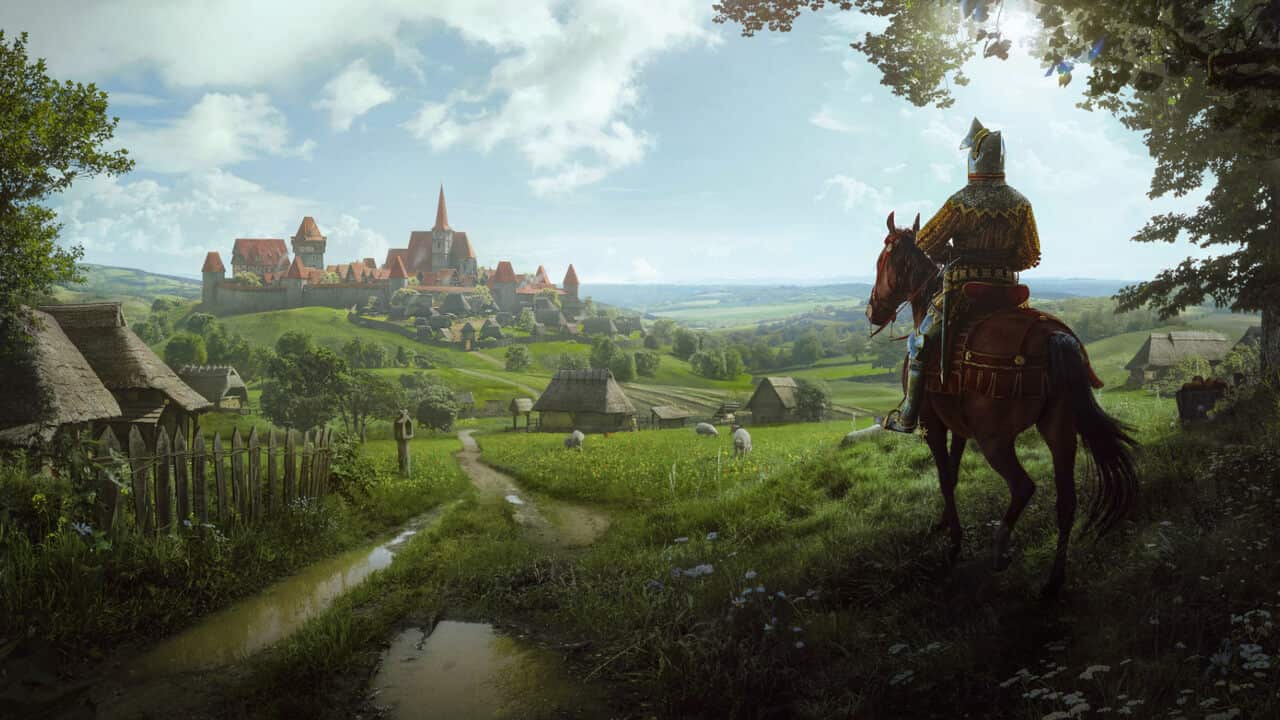
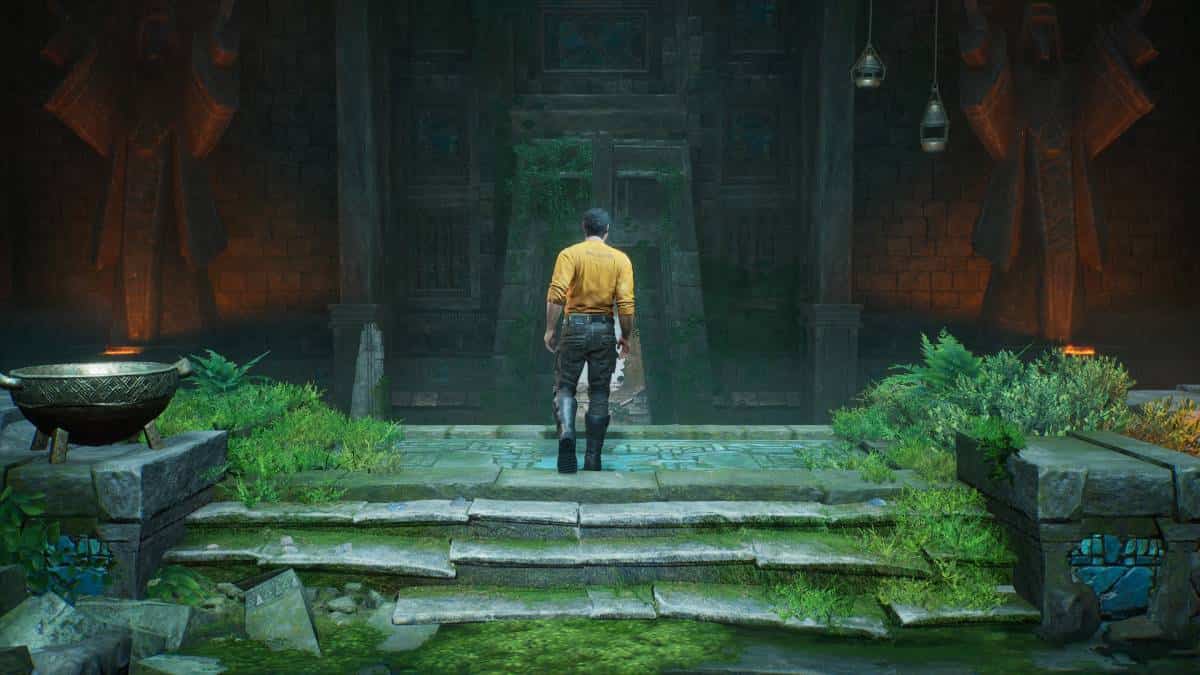
At the best of times this translates to design choices that highlight the actual scale of Reckoning's world. Despite being a relatively linear RPG, Rolston's hand in the title makes sure it doesn't stray far from The Elder Scrolls' genetic pool. What you get is a damn big thing. Amalur's five massive regions each have their own geographical style, ranging between packed forests, bayous, and desert canyons. Lore stones and harvestable items are scattered around each kingdom, the former just adding a sprinkle of narrative flavour and the latter used as crafting material, but each pushes you slightly outside the game's prescribed path.
Similar to Diablo, the game's loot fanaticism makes grinding mobs another reason to continue exploring. The combat, on the other hand, owes itself to Darksiders as much as it does God of War, emphasising knockabout button mashing over precision. Well timed blocks, dodges and parries are required when the game is at its most difficult, but for the most part Reckoning is a slaughterhouse of simplistic targets. Weapon combos and magic abilities add to your arsenal, while temporary buffs are scattered through each zone in the guise of rock monuments.
As Amalur's fateless wonder your class is extremely malleable. While the usual Warrior, Mage, and Rogue archetypes persist, the lines between them are blurred. Reckoning encourages you to use different weapons without ever being locked in to any specific melee or ranged sub-category, and while you'll learn to specialise as you start pouring points into your ability trees, the game allows for and encourages experimentation.
Destiny cards are accumulated as you level and give you additional stats specific to certain play styles. These get broken into Might, Finesse, and Sorcery talent trees, the three sections complemented by cards designed for those who split their points between two or even all three trees to create a hybrid class. The cards are also dealt liberally - users can switch between any of those already unlocked at any point.


User Comments
FantasyMeister@ Wido
Wido@ FantasyMeister
FM, did you go into the first mine after the first part of the game? A Static bow with 20 damage + additional damage. Tough enemies in the mine by the way, but easily killed when you drag 1 or 2 away from the packs. A Iron Longsword can also be found, so it can get rid of the Rusty Longsword you get in the first part. Saying all that however... Seeing as you are 5hrs in, I guess you have? :laugh:
FantasyMeister
Very pleased to have this in my collection, got my money's worth for sure and should be playing this for a few weeks to come.
Darkr8zor
Wido
Clockpunk
To paraphrase - I feared the setting was rather bland with no distinctive setting characteristics - precisely why I am highly anticipating Risen 2: Dark Waters despite its questionable lineage... much more so than this.
I shall give the demo another run through as a female character, but... well, I didn't have any hopes of being a 'convert', and given the importance of a setting having a unique spark - which seems to be lacking here - I can't see it happening.
andyb2610
Endless
MrGloomy
I really admired Vigil Games' approach to Darksiders, and I get a similar vibe with 38 Studios approach to Reckoning, with it's use of tried and tested rpg mechanics. Good luck 38 Studios and well done for trying to meld free-flowing combat with old-school rpg-ing. I can happily say that I can trade in my MW3 without a single regret. Problem now, is that I'm still plowing through Skyrim without a hint of boredom.